
Introduction
Good chiropractic care should make sense before it makes a sound. That is the standard worth using when considering xeiropraktis for back pain, neck discomfort, stiffness, or other musculoskeletal problems. An adjustment may feel immediate, but the real question is what happens afterward: Can you move more comfortably? Can you return to normal activities? Is the treatment helping you build a better recovery plan rather than keeping you dependent on appointments?
That distinction separates useful treatment from exaggerated promises.
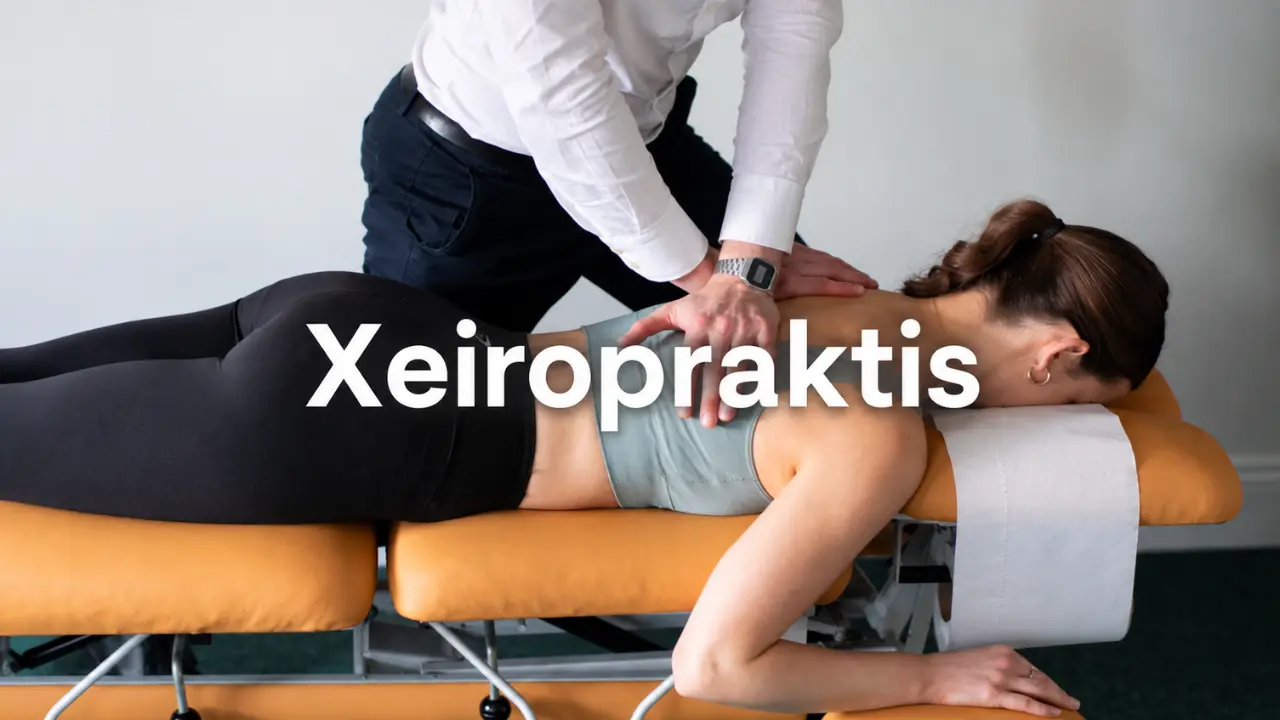
Chiropractic care commonly involves manual therapy, often including spinal manipulation, while practitioners may also use exercise advice and other approaches. Chiropractors typically assess a patient’s history and physical condition before developing a treatment plan, rather than simply performing the same procedure on everyone.
What xeiropraktis looks like in real clinical practice
A good session starts with assessment, not adjustment.
When someone arrives with back or neck pain, a responsible practitioner should first understand how the problem developed. Was there an injury? Did the pain appear gradually? Does sitting make it worse? Is movement restricted? Has the problem happened before? Are there symptoms outside the usual pattern of muscular or joint discomfort?
Those questions matter because pain does not have one universal cause.
The assessment may include a discussion of medical history, physical examination, movement assessment, and consideration of whether manual treatment is appropriate. A practitioner may then create a treatment plan and monitor how the patient responds over time. This assessment-based approach is consistent with how chiropractic care is described by the National Center for Complementary and Integrative Health.
Xeiropraktis should therefore be viewed as part of a clinical decision, not as an automatic response to every episode of back pain.
Why the first consultation matters
A short conversation before treatment can reveal whether the practitioner is thinking about the actual problem.
Someone who immediately recommends repeated adjustments without asking meaningful questions deserves caution. A practitioner who explains what they suspect, what they intend to do, what improvement would look like, and when another type of healthcare may be appropriate is taking a more responsible approach.
That difference may seem small, but it changes the entire treatment experience.
Where xeiropraktis can be useful
The strongest case for chiropractic care is musculoskeletal pain, particularly certain forms of lower-back and neck pain.
Research on spinal manipulation has found that it may produce small improvements in pain and function for people with acute or chronic low-back pain. Function is especially important because it includes practical activities such as walking, standing, sleeping, and handling household tasks.
That evidence does not justify promising dramatic results. It supports a much more practical conclusion: spinal manipulation can be one treatment option for selected people with back pain.
For acute low-back pain, research has found modest improvements in pain and function. For chronic low-back pain, studies have also reported small improvements, although the quality and consistency of evidence vary.
Neck pain is another area where spinal manipulation or mobilization has been studied. Evidence suggests that these approaches can help certain people with acute or chronic neck pain, but the choice of treatment still needs to take the individual’s symptoms and risk factors into account.
Why the cracking sound is not the point
The sound associated with an adjustment gets far more attention than it deserves.
Spinal manipulation involves a controlled force applied to a spinal joint. It is different from spinal mobilization, which uses movement within a joint’s natural range without the same thrust.
Neither approach should be judged by sound alone.
A loud crack does not prove that a condition has been corrected. Likewise, the absence of a sound does not automatically mean that treatment has failed.
A better test is what changes afterward.
If someone can turn their head more comfortably, walk with less discomfort, sleep more easily, or return to ordinary activities, those changes matter far more than what happened during the few seconds of an adjustment.
That is where xeiropraktis should be judged.
The role of exercise after hands-on treatment
Manual treatment can sometimes make movement feel easier. That can be useful, but it should not become the entire recovery strategy.
A person with recurring back pain may need to rebuild strength, movement tolerance, confidence, and everyday activity. Exercise and other non-drug approaches are recognised options in the management of low-back pain, alongside treatments such as spinal manipulation.
This is why a treatment plan that combines appropriate hands-on care with active rehabilitation can make more sense than repeated passive treatment alone.
Imagine someone who develops lower-back discomfort after spending long hours sitting. An adjustment may temporarily reduce stiffness, but if the person continues to spend most of the day inactive and never works on movement capacity, the underlying pattern has not changed much.
Xeiropraktis can have a useful role when it helps someone move enough to participate in the rest of their recovery.
The objective should be progress outside the clinic.
What the evidence does not support
There is a big difference between evidence for treating musculoskeletal pain and claims that chiropractic care can address almost any health problem.
Research is much stronger for specific pain and movement conditions than for broad claims involving unrelated non-musculoskeletal diseases. NCCIH notes that high-quality evidence for spinal manipulation in non-musculoskeletal conditions remains limited and has not demonstrated clear benefits for those conditions.
That distinction should stay clear.
Xeiropraktis should not be marketed as a universal solution for every symptom a person experiences. A treatment that has evidence for certain types of back pain does not automatically have evidence for digestive problems, infections, serious neurological disorders, or unrelated medical conditions.
A trustworthy practitioner knows where the evidence ends.
That is not a weakness. It is good healthcare.
Understanding the risks before treatment
No physical treatment should be presented as completely risk-free.
Mild or temporary reactions after spinal manipulation can include increased discomfort, stiffness, or headache. NCCIH reports that these effects commonly resolve within about 24 hours. Serious complications have been reported but are considered very rare.
The neck deserves particular attention.
Neck manipulation has been discussed in relation to cervical artery dissection, a rare condition involving a tear in an artery wall that can potentially lead to stroke. The evidence surrounding causation is complicated, and the overall incidence is low, but the potential risk is important enough that patients should be informed about it.
That does not mean people should automatically avoid all chiropractic treatment. It means informed decisions matter.
Before treatment, a practitioner should know about relevant health conditions, medications, previous injuries, and other factors that could affect safety.
When caution matters most
A person with an existing medical condition may have different risks from someone who is otherwise healthy. Pregnancy and other special circumstances can also require individual assessment before spinal manipulation.
This is another reason a proper consultation should happen before treatment.
When xeiropraktis should not be the first answer
Not every back or neck problem is a routine musculoskeletal complaint.
Severe symptoms, significant neurological changes, pain following major trauma, or other warning signs can require medical assessment rather than a routine adjustment. Persistent symptoms that do not behave as expected also deserve a closer look.
The key issue is not whether someone prefers chiropractic care or conventional medicine.
It is whether the proposed treatment matches the actual problem.
If the symptoms suggest something outside the normal scope of musculoskeletal care, delaying appropriate medical assessment simply to continue manual treatment is a poor decision.
Xeiropraktis should have boundaries.
Those boundaries protect the patient and make the treatment more credible.
Xeiropraktis and physiotherapy are not identical choices
People often treat chiropractic care and physiotherapy as if one must replace the other. That is too simplistic.
Both fields can involve assessment, movement advice, rehabilitation, and hands-on techniques. The emphasis can differ depending on the practitioner and the patient’s condition.
Chiropractic care is strongly associated with manual therapy and spinal manipulation. Physiotherapy often places greater emphasis on exercise, rehabilitation, restoring movement, and improving physical function.
There can also be overlap.
A chiropractor may recommend exercises, while a physiotherapist may use manual therapy. The practical difference for a patient is often less about the professional label and more about what treatment is actually being offered.
Choosing based on the problem
If someone has uncomplicated low-back pain, the useful question is not which profession has the better reputation.
The better question is whether the practitioner can assess the condition properly and offer an appropriate plan.
If that plan includes reasonable expectations, active rehabilitation, monitoring, and referral when necessary, it is more convincing than a treatment model based entirely on repeated adjustments.
How to judge a good xeiropraktis practitioner
Professional behaviour is one of the easiest things for a patient to evaluate.
A good practitioner should ask questions before treatment. They should explain what they think is happening and why they recommend a particular technique. They should be willing to discuss benefits, risks, alternatives, and expected progress.
They should also be comfortable admitting when treatment is not working.
That last point is critical.
If symptoms are unchanged after a reasonable period, continuing indefinitely without reassessing the situation does not make sense. A treatment plan should respond to results.
NCCIH recommends considering a practitioner’s training and experience and discussing complementary approaches with healthcare providers, particularly when chronic pain or other health conditions are involved.
Questions worth asking before treatment
Before agreeing to treatment, ask:
- What do you think is causing my symptoms?
- Why are you recommending this particular technique?
- What improvement should I realistically expect?
- Are there alternatives I should consider?
- What symptoms would mean I need medical assessment?
- What should I do between appointments?
- What happens if the treatment does not improve my symptoms?
A practitioner who welcomes these questions is easier to trust than one who treats questions as resistance.
The most useful measure of success
The success of xeiropraktis should not be measured by how often someone visits a clinic.
It should be measured by what happens in ordinary life.
Can the person sit comfortably for longer? Can they walk without the same level of pain? Can they sleep properly? Can they return to work, sport, or household activities? Can they manage their condition with more confidence?
Those outcomes tell you much more than the number of appointments completed.
For low-back pain, research suggests spinal manipulation can produce modest improvements in pain and function, which places it alongside other non-drug treatment options rather than above every alternative.
That is a useful perspective because it keeps expectations realistic.
What a sensible treatment plan should look like
A sensible plan should have a reason behind every major step.
If manual treatment is recommended, the practitioner should be able to explain why. If exercises are included, they should relate to the person’s limitations and goals. If treatment is expected to continue, there should be a reason for continuing it.
The plan should also change if the patient’s condition changes.
For recurring pain, this may mean moving from symptom relief toward strengthening, mobility, activity, and self-management. For an acute problem, the emphasis may initially be on reducing discomfort and restoring comfortable movement.
There is no single schedule that works for everyone.
That is precisely why promises of a fixed number of adjustments for every patient should be treated carefully.
The right way to think about xeiropraktis
The strongest argument for xeiropraktis is not that it can fix everything. It is that, for selected musculoskeletal problems, appropriately delivered manual treatment may help reduce pain and improve function.
The evidence supports modest benefits in certain forms of low-back pain and neck pain. It does not support turning chiropractic treatment into a cure-all.
That distinction gives patients a better way to make decisions.
Use treatment when there is a sensible reason for it. Ask what the evidence says. Understand the risks. Expect active participation in recovery. Be willing to reconsider the plan if the results are poor.
Most importantly, judge treatment by what it allows you to do in real life.
A successful appointment is not the one that produces the loudest crack or the most impressive explanation. It is the one that moves you closer to normal activity without making promises the treatment cannot keep.
FAQs
1. Can xeiropraktis help if my back pain keeps returning?
It may help with symptoms in certain cases, but recurring pain deserves more than repeated short-term relief. A practitioner should look at contributing factors and consider exercise, activity, rehabilitation, and other appropriate options alongside manual treatment.
2. Is it normal to feel sore after spinal manipulation?
Temporary soreness, stiffness, discomfort, or headache can occur after treatment and often settles quickly. If symptoms are severe, unusual, or do not improve, seek appropriate medical advice rather than assuming another adjustment is the solution.
3. Should I stop exercising while receiving xeiropraktis?
Not automatically. For suitable musculoskeletal conditions, remaining active and using appropriate exercise can be an important part of recovery. The specific activity should match your condition and current ability.
4. What should I do if a chiropractor recommends a long treatment package immediately?
Ask why that number of appointments is necessary, what measurable improvement is expected, and how the plan will change if you improve sooner or fail to improve. You should not feel pressured to commit before understanding the reasoning behind the recommendation.
5. Is a chiropractor the right person to see for every type of back pain?
No. Chiropractic care can be appropriate for certain musculoskeletal problems, but back pain can also have causes requiring medical assessment. Severe, unusual, worsening, or injury-related symptoms should be evaluated appropriately before assuming manual treatment is the answer.