
Introduction
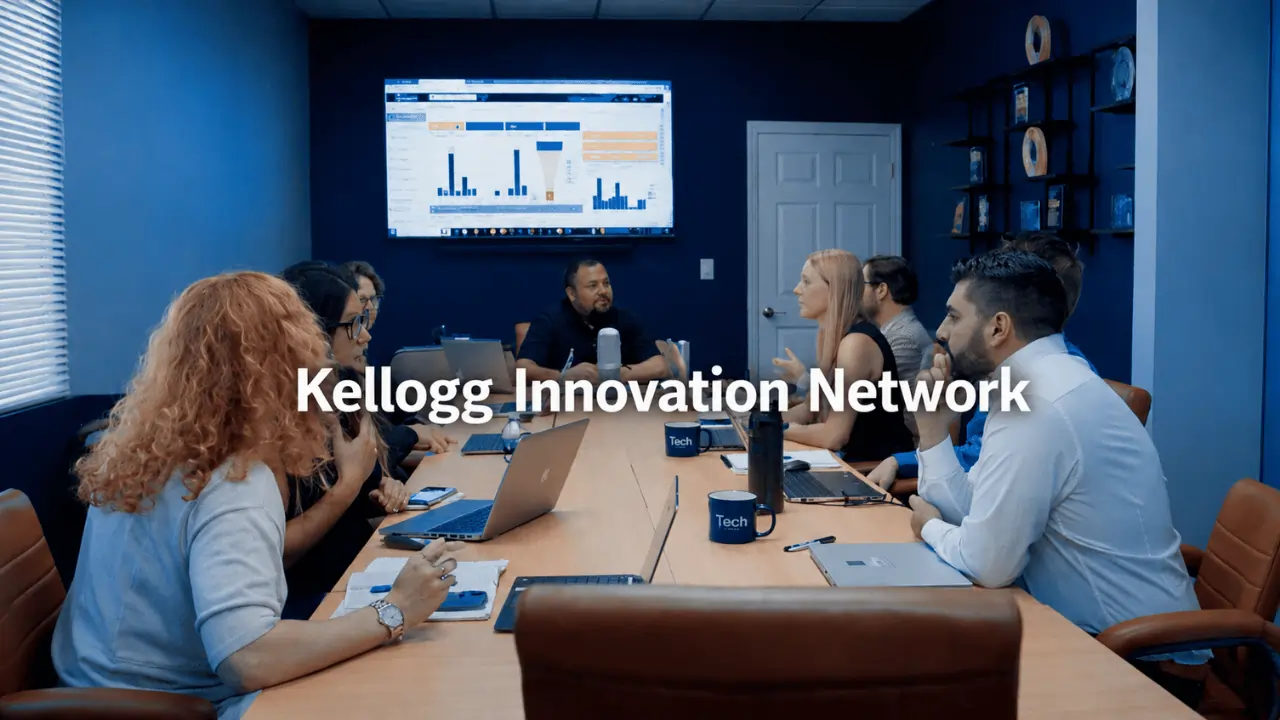
The kellogg innovation network stood out because it treated innovation as a relationship problem as much as a business problem. Instead of keeping executives inside industry-specific circles, it brought business leaders, academics, government representatives, nonprofit figures, entrepreneurs, and other innovators into the same conversations. That choice created something more useful than another conference: a setting where people could challenge familiar assumptions, exchange experiences, and turn promising ideas into action.
Founded in 2003 by Kellogg faculty members Robert C. Wolcott and Mohanbir Sawhney, the network developed around a simple but demanding idea: meaningful innovation becomes more likely when people with different experiences work together. Northwestern describes Wolcott as the founder of KIN and notes that the organization has since become an independent organization known as The World Innovation Network, or TWIN.
The history of the kellogg innovation network is therefore not just a story about a business-school initiative. It is a story about how professional communities can influence research, business decisions, entrepreneurial projects, and wider social challenges when the right people are given reasons to keep working together.
How the Kellogg Innovation Network Started
The kellogg innovation network began in 2003 at the Kellogg School of Management at Northwestern University. Robert C. Wolcott and Mohanbir Sawhney were central to its creation, working with corporate innovation leaders to establish a network that could connect academic thinking with the problems executives were facing in practice.
That distinction was important from the beginning.
Traditional academic research can produce useful frameworks, but business leaders often face problems that do not fit neatly into a case study. They have to deal with organizational resistance, uncertain markets, customer behavior, investment decisions, competing priorities, and pressure to produce results. KIN created a bridge between those practical challenges and the research environment at Kellogg.
Its focus was also broader than product development.
Innovation could involve a new business model, a different customer experience, a new market, a new operating process, or a different way of creating value. That wider view gave the network room to explore innovation across industries rather than reducing it to technology or product launches.
The People Who Gave KIN Its Character
Robert C. Wolcott became one of the best-known figures associated with the network. Northwestern’s current profile says he founded KIN in 2003 and describes the organization as having evolved into TWIN.
Mohanbir Sawhney was also a co-founder. The combination of academic expertise and corporate participation helped shape the network’s character.
KIN was not designed around a single type of participant. Its membership and events connected people from corporations, universities, government, nonprofits, healthcare, technology, defense, and other sectors. That mixture was deliberate.
A technology executive could bring one interpretation of a problem. A government leader might see the same issue through policy and infrastructure. A nonprofit leader could introduce constraints that businesses rarely encounter. An academic could question assumptions that had become accepted inside an industry.
The value came from putting those perspectives together.
Why KIN Global Became So Important
KIN Global became one of the most visible parts of the network.
The 2009 KIN Global Summit brought delegates from more than 20 countries and six continents. Its theme, “Building Global Prosperity: Innovation and Action,” reflected the network’s ambition to connect innovation with problems larger than individual companies.
The format was deliberately different from a conventional conference.
At the 2009 summit, roughly half of the program was determined by the invitation-only delegates themselves. Participants proposed and selected topics before moving into working sessions. That gave attendees more influence over the discussion instead of forcing everyone to follow a fixed presentation schedule.
That model reveals something important about the kellogg innovation network: participation mattered as much as presentation.
The goal was not simply to hear an impressive speaker and return home with notes. The stronger objective was to create connections that could continue after the event.
From Conference Conversations to Real Projects
KIN Global also gave students a role in the wider conversation.
In 2009, five teams of students became the inaugural KIN Global Scholars. Their research examined subjects ranging from global prosperity and value creation to the potential of younger generations. The students presented their findings to delegates and discussed the work with people directly involved in the relevant fields.
That arrangement created a useful exchange.
Students gained exposure to complex real-world problems, while experienced leaders gained access to fresh research and perspectives. Neither side had to remain in its usual professional bubble.
That was one of the smarter aspects of the kellogg innovation network.
The Network Was Designed to Move Beyond Talk
Innovation communities often face one predictable problem: conversation can become the end product.
KIN tried to avoid that.
Robert Wolcott described KIN Global as being more focused on innovative solutions to major challenges and on leading those conversations toward action. The network’s events were intended to create relationships that continued after delegates left Kellogg.
One example came from the 2009 summit.
Kimmie Weeks, founder of Youth Action International, shared his experiences and explained the organization’s work supporting young people in post-war countries. After his presentation, delegates spontaneously contributed nearly $50,000 to the organization. The funds were later used to support women’s business centers in Liberia and Sierra Leone.
That episode captures what made KIN different.
Nobody needed another panel discussion about social impact. The participants heard a problem, connected with the person working on it, and decided to act.
The network did not guarantee that every conversation would produce an outcome. But it created an environment where action was considered part of the conversation rather than something that could be postponed indefinitely.
The KIN Prize Put Action at the Center
The network took this principle even further through its student competitions.
At the 2012 KIN Global Summit, the KIN Prize offered $100,000 to four interdisciplinary Northwestern student teams. Instead of asking students to submit conventional business plans, the competition focused on action plans designed to generate greater global prosperity.
The distinction was intentional.
A business plan can describe what might happen. An action plan has to confront what happens next.
Who will implement the idea?
What resources are required?
Which people need to be involved?
What happens after the initial funding?
Those questions force an idea out of presentation mode and into reality.
At that competition, Fresh Takes Kitchen received $42,700, while NuMat Technologies received $27,000, Health m-Power received $16,400, and Mimas Nanomaterials received $13,900. The participating projects addressed issues including affordable food, green power, mobile healthcare, and converting plastic waste into clean energy.
The following year’s KIN Global Summit also featured a student competition with $100,000 in prize money. Wolcott again emphasized the difference between a business-plan competition and an action-plan competition.
That focus on implementation is one of the clearest reasons the kellogg innovation network remains an interesting case study.
Trust Was More Important Than Networking
The most valuable part of a network is rarely the number of names in a contact list.
KIN’s own experience suggests that trust mattered more.
In a Kellogg Insight interview, Wolcott explained that the strongest KIN participants were those who returned repeatedly and developed trusting relationships. He argued that people become more willing to listen to unconventional ideas when they already know and trust the person presenting them.
That is a subtle point, but it explains why one-off networking events often produce limited results.
Imagine meeting someone for the first time and hearing an idea that sounds strange. The natural reaction may be skepticism.
Now imagine hearing the same idea from someone you have worked with for years.
The idea may still be wrong, but you are more likely to investigate it before dismissing it.
The kellogg innovation network understood that repeated contact could create that kind of professional trust. It was not merely trying to increase the number of introductions. It was trying to create relationships strong enough to support uncomfortable conversations.
KIN Looked Outside Traditional Industry Boundaries
Another strength of the network was its willingness to look beyond conventional business circles.
Wolcott noted that people within the same industry often attend the same conferences, speak with the same competitors, and recruit from the same talent pools. If organizations continually search in the same places for answers, they risk producing the same ideas.
That observation explains the logic behind KIN’s cross-sector approach.
An executive does not always need another person who has solved the exact same problem. Sometimes the more useful person is someone who has solved a completely different problem using a different method.
Healthcare may learn from aviation.
Manufacturing may learn from software.
Government may learn from entrepreneurial organizations.
A nonprofit may introduce a resourceful approach that a large corporation would never have considered.
The value comes from the unexpected connection.
KIN Expeditions Took Learning Into Real Innovation Ecosystems
The network did not limit its activities to meetings at Kellogg.
KIN Expeditions took participants into innovation and entrepreneurship ecosystems, allowing them to experience how different regions approached business creation, technology, investment, and collaboration.
A notable example was the 2014 KIN visit to Tel Aviv and Jerusalem. The delegation explored Israel’s technology ecosystem, met with people connected to entrepreneurship and innovation, and developed relationships with local participants.
The point was not simply to admire another country’s startup culture.
Seeing an ecosystem directly can expose details that are easy to miss in reports. Participants can observe how entrepreneurs interact with investors, how universities contribute to technology development, how government policy influences growth, and how established businesses connect with newer companies.
For the kellogg innovation network, these experiences provided another way to challenge assumptions.
Innovation is shaped by its environment. The same strategy can produce very different results when moved from one ecosystem to another.
KIN Connected Research With Problems Companies Were Actually Facing
The network also played a role in informing academic research.
KIN’s 2009 summit materials specifically described the network as an ongoing forum where executives and innovators could discuss business challenges, growth, and strategy with people from government, academia, nonprofits, healthcare, technology, defense, and other sectors. The same source states that KIN helped inform faculty research by identifying issues facing innovation leaders.
That exchange gave research a practical reference point.
Instead of starting with a theoretical question and searching for a business application afterward, researchers could encounter problems that companies were already struggling to solve.
The result was a two-way relationship.
Businesses gained access to research and academic thinking. Researchers gained access to real situations where their ideas could be challenged.
That relationship is particularly valuable in innovation because the distance between an interesting idea and a workable business solution can be enormous.
The Corporate Side Gave KIN Practical Credibility
Historical KIN materials describe participation from major companies including Cisco, Kraft, Chamberlain Group, Bunge, IBM, DuPont, and Raytheon. A Robert Wolcott curriculum vitae also describes KIN as a network of senior executives from global corporations and notes that the program raised more than $1 million from corporate donors during a three-year period.
The important point is not simply that large companies participated.
Large companies make innovation difficult in a distinctive way.
They have resources, talent, customers, data, and established infrastructure. Yet those same strengths can create resistance to change. A successful existing business can make an uncertain new idea look unnecessarily risky.
That is where outside relationships can become valuable.
Executives can compare experiences, discuss failed approaches, and see how another organization handled a similar obstacle.
The kellogg innovation network gave those conversations a structured environment.
What Businesses Can Still Learn From the KIN Model
The network’s history offers lessons that remain useful for organizations building innovation programs today.
Build Relationships That Survive the Meeting
A contact list is not an innovation strategy.
The stronger model is to create repeated opportunities for people to work together. Trust develops through shared experiences, not introductions alone.
Invite People Who Think Differently
If every participant has the same professional background, the discussion may become comfortable but predictable.
The kellogg innovation network deliberately crossed sectors because different perspectives could expose assumptions that insiders no longer noticed.
Reward Action, Not Just Ideas
The KIN Prize’s action-plan approach is particularly relevant. Organizations should ask what happens after an idea is approved rather than celebrating the idea itself.
A promising concept needs an owner, resources, testing, feedback, and a realistic next step.
Study Ecosystems, Not Just Companies
Businesses often focus on individual organizations when trying to understand innovation.
KIN’s expedition model suggests a broader question: what conditions allow an entire ecosystem to produce new companies, technologies, partnerships, and opportunities?
That question can reveal more than copying the practices of one successful company.
Give Researchers and Practitioners Reasons to Meet
Research becomes more useful when it interacts with real problems. Practitioners also benefit when someone outside their organization challenges assumptions with evidence and new frameworks.
The kellogg innovation network created a channel for that exchange.
Where the Kellogg Innovation Network Went Next
The history of KIN does not end with its early Kellogg activities.
Northwestern’s current profile of Robert Wolcott states that he founded the kellogg innovation network in 2003 and that it is now an independent organization known as The World Innovation Network, or TWIN. The profile also notes that TWIN Global holds an annual summit in September, bringing leaders together around issues significant to organizations and society.
That development matters because it shows how the original idea expanded beyond its university setting.
KIN began with a connection to Kellogg and its corporate and academic community. Over time, the broader network developed an identity of its own.
The evolution also reinforces the central lesson behind the organization: a useful innovation community does not have to remain confined to the structure in which it started.
Why the KIN Story Still Deserves Attention
The strongest lesson from the kellogg innovation network is not a particular event, company, competition, or conference.
It is the network’s insistence that innovation improves when people stop looking for answers only within familiar boundaries.
The 2009 summit demonstrated the potential of international collaboration. KIN Global Scholars connected students with experienced leaders. The KIN Prize pushed students toward action rather than presentation. KIN Expeditions exposed participants to different innovation ecosystems. Long-term relationships created enough trust for people to discuss unconventional ideas.
Those pieces fit together.
Innovation needs ideas, but ideas alone are not enough. It needs people who can challenge them, resources to test them, environments where failure can be examined honestly, and relationships strong enough to keep the work moving.
That is what makes the kellogg innovation network more than an interesting chapter in Kellogg’s history.
Conclusion
The kellogg innovation network offers a useful challenge to the way organizations often talk about innovation.
If innovation is reduced to brainstorming sessions, strategy presentations, or a department with a creative name, the results will usually be limited. Real progress requires people who are willing to question established thinking and stay involved long enough to turn those questions into experiments.
KIN built its approach around that reality.
Its history shows the value of cross-sector relationships, repeated interaction, practical action, international exposure, and honest exchange. Its evolution into The World Innovation Network also shows that a strong community can outgrow the institution where it began.
The lesson for today’s leaders is direct: stop asking only where the next idea will come from. Ask who is missing from the conversation, what assumptions have gone unchallenged, and what will actually happen after the meeting ends.
That is where innovation starts becoming real.
FAQs
1. Who founded the Kellogg Innovation Network?
The kellogg innovation network was founded in 2003 by Kellogg faculty members Robert C. Wolcott and Mohanbir Sawhney, with involvement from corporate innovation leaders. Northwestern identifies Wolcott as the founder of KIN.
2. What made KIN Global different from a normal business conference?
KIN Global was designed around collaboration and action rather than simply listening to speakers. Delegates helped shape discussions, worked across sectors, and were encouraged to continue relationships and projects after the summit ended.
3. Why did KIN involve people outside the business world?
The network recognized that difficult innovation problems often cross organizational boundaries. Government officials, academics, nonprofit leaders, entrepreneurs, and corporate executives could bring different experiences to the same problem, making the discussion less predictable and potentially more useful.
4. What was the KIN Prize?
The KIN Prize was an action-focused competition connected with KIN Global. In 2012, four Northwestern student teams competed for a total of $100,000, with delegates deciding how the prize money should be distributed among the projects.
5. Is the Kellogg Innovation Network still operating under the same name?
Not in its original form. Northwestern’s current profile of Robert C. Wolcott says the organization founded as KIN is now an independent organization known as The World Innovation Network, or TWIN. TWIN Global continues the broader work of bringing leaders together around significant organizational and societal issues.