
Introduction
kotora melnkalne leads to one of the most striking historic settings on the Adriatic: Kotor, Montenegro. The phrase appears unfamiliar to English-speaking readers, but the geographic connection is well documented. The Latvian National Library’s geographical-name database records “Kotora (Melnkalne)” and links it with Kotor in Montenegro. That makes the subject far less mysterious than some online pages suggest and far more interesting as a piece of European geography and travel.
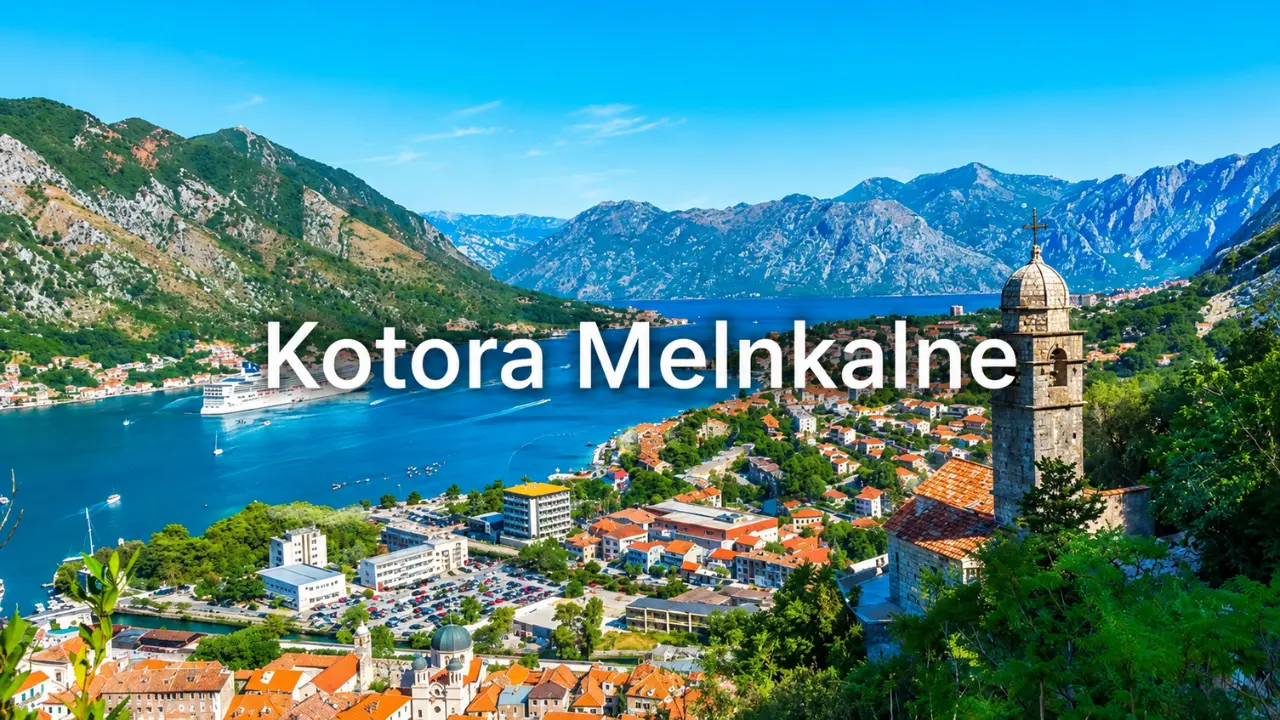
The destination itself needs little embellishment. Kotor sits within the Bay of Kotor, where steep mountains surround historic settlements, fortified walls, churches, palaces, and a waterfront shaped by centuries of maritime activity. The wider Natural and Culturo-Historical Region of Kotor has been recognized by UNESCO since 1979.
kotora melnkalne and the geographical name behind it
The clearest evidence about kotora melnkalne comes from the Latvian National Library rather than from modern travel blogs.
Its geographical-name authority record is titled “Kotora (Melnkalne).” The same record gives Kotor in Montenegro as the English geographical equivalent and lists alternative forms connected with Montenegro and Kotor.
That detail matters because the internet has produced several imaginative explanations for the phrase. Some pages have presented it as a mysterious destination or a separate place. The authoritative geographical record does not support that interpretation.
For practical purposes, a traveler searching for kotora melnkalne should search for Kotor, Montenegro when looking for maps, accommodation, transportation, tourism information, and attractions.
The distinction is simple but useful: the unfamiliar wording comes from a different language context, while Kotor is the English name visitors will encounter when planning a trip.
Where Kotor is located
Kotor lies in southwestern Montenegro on the Bay of Kotor, known locally as Boka Kotorska. Montenegro sits on the Adriatic coast of southeastern Europe, and Kotor occupies one of the country’s most dramatic coastal landscapes.
The town is surrounded by steep rocky mountains that rise rapidly from the bay. UNESCO describes the protected landscape as encompassing the inner southeastern part of Boka Kotorska, with mountains reaching nearly 1,500 metres around the bays.
This geography explains much of Kotor’s character.
The town is not simply a seaside settlement with mountains somewhere in the distance. Water and mountains press closely against the historic urban area, creating a compact setting in which the landscape and architecture appear almost inseparable.
That relationship is one of the main reasons the Kotor region received UNESCO recognition. The significance comes from the combination of historic settlements, architecture, fortifications, cultural monuments, and the surrounding landscape rather than from one isolated building.
Why Kotor has such a distinctive character
Kotor developed as an important Adriatic centre, and its location helped shape its political and commercial importance.
UNESCO describes the region as an important artistic and commercial centre during the Middle Ages, with established traditions in masonry and iconography. Its historic architecture also reflects the movement and exchange of Mediterranean cultures into the Balkans.
The result is visible throughout the old city.
Stone buildings sit close together along narrow streets. Churches and historic civic buildings occupy small squares. Defensive structures climb toward the mountainside. The waterfront connects the town to the bay that helped sustain its maritime identity.
Kotor therefore feels different from a resort town built mainly around beaches and modern tourism. Its strongest attraction is the accumulated character of the place.
For anyone researching kotora melnkalne, this is the part worth emphasizing. The real destination has enough documented history that there is no need to invent a hidden backstory.
The Old Town is the heart of the experience
Kotor’s Old Town is the obvious place to begin exploring the city.
Inside the historic walls, the streets form a compact network of stone lanes and small squares. The scale makes walking the most natural way to experience the area. Instead of moving between distant attractions, visitors encounter historic buildings almost continuously.
The Clock Tower is one of the recognizable landmarks in the center. St. Tryphon’s Cathedral is another major feature, while churches such as St. Luke and St. Mary contribute to the religious and architectural character of the old city.
Montenegro’s official tourism information highlights the Clock Tower, St. Tryphon’s Cathedral, the churches of St. Luke and St. Mary, the Prince’s Palace, the Church of Our Lady of Health, and the historic Napoleon Theatre among Kotor’s cultural landmarks.
What makes these buildings interesting is not simply their age. They demonstrate how religious, civic, commercial, and defensive functions developed together inside a tightly organized historic settlement.
A slow walk through the Old Town is therefore more rewarding than trying to photograph every landmark as quickly as possible.
Kotor’s walls reveal the city’s strategic importance
The defensive walls are one of the strongest reminders that Kotor was once a strategically important fortified settlement.
The fortifications rise above the historic city toward the mountainside. From higher sections, visitors can see the old town, the bay, and the surrounding mountain landscape from a completely different perspective.
The climb is not the easiest activity in Kotor, particularly in hot weather, but the view explains why the defensive position mattered.
From above, the geography becomes obvious. The town occupies a narrow space beside the water while steep terrain rises immediately behind it. The same mountains that create today’s spectacular scenery also helped shape the city’s defensive character.
Kotor’s fortifications are therefore not decorative additions to a pretty town. They are part of the historical logic of the place.
Montenegro’s official tourism information also connects Kotor Fortress with the wider Venetian defensive system recognized through UNESCO’s heritage framework.
Venetian influence is visible throughout Kotor
One of the most recognizable historical influences on Kotor is Venice.
Kotor and its surrounding territory belonged to Venice from 1420 to 1797. That long period left a clear architectural and cultural imprint on the city.
The Venetian connection is especially important because Kotor was part of a wider Adriatic world rather than an isolated mountain settlement.
Architecture, trade, maritime activity, religion, art, and military planning developed across the region through connections between coastal cities and Mediterranean powers.
The buildings visitors see today are therefore physical evidence of those relationships.
This is another reason kotora melnkalne works better as a geographic and historical subject than as an internet mystery. Once the phrase is connected to Kotor, it opens the door to a genuine story about the Adriatic and the cultures that shaped Montenegro’s coast.
The Bay of Kotor is part of the attraction
It would be a mistake to discuss Kotor only as an old town.
The Bay of Kotor is essential to understanding the city’s identity. Historic settlements sit along the water, while mountains rise sharply around the bay. UNESCO describes the protected region as a cultural landscape in which architecture and settlement patterns are closely integrated with the surrounding terrain.
A viewpoint from above shows the relationship clearly, but the water offers another perspective.
Boat trips can reveal the coastline from a different angle, while nearby settlements such as Perast provide additional examples of the region’s historic architecture.
The island church of Our Lady of the Rocks is also one of the better-known sights around the bay.
The wider region rewards travelers who resist the temptation to treat Kotor as a single attraction. The city is the centre of the experience, but the bay gives the experience its scale.
UNESCO recognition is more than a tourism label
The Natural and Culturo-Historical Region of Kotor was added to the UNESCO World Heritage List in 1979. The designation recognizes the relationship between architecture, historic settlements, cultural monuments, and the natural landscape.
UNESCO notes that the area contains fortified and open cities, settlements, palaces, monasteries, and other architectural elements integrated into the landscape. It also identifies Kotor’s historical role in the movement of Mediterranean cultures into the Balkans.
That makes the designation particularly significant.
Kotor is not protected simply because it has attractive buildings. The value lies in the complete cultural landscape.
The UNESCO record also notes that the region suffered serious damage during the 1979 earthquake. Major monuments and historic urban areas were subsequently restored and reconstructed, with UNESCO playing an important role in the recovery.
The 1979 earthquake changed Kotor’s modern history
The 1979 earthquake is an essential part of the modern story of Kotor.
Several important monuments were badly damaged. Restoration and reconstruction became a major undertaking because preserving Kotor meant protecting not just individual buildings but the character of the historic urban landscape.
UNESCO records that the principal monuments and historic urban areas were carefully restored after the earthquake while retaining their architectural, urban, and historical authenticity.
That recovery is easy to overlook when walking through the Old Town today.
Visitors see stone walls, churches, squares, and historic buildings that can appear timeless. In reality, preservation is an active process. What looks old and permanent has required substantial work to survive.
That point gives Kotor’s heritage another dimension. Its historic appearance is not evidence that nothing has changed. It is evidence that preservation efforts have mattered.
Kotor still faces pressure from modern development
Preserving a historic city does not end once damaged buildings have been repaired.
UNESCO identifies development and urbanization as continuing challenges for the wider protected area. New tourism centres, roads, and coastal buildings can alter the landscape, while changes in traditional practices can weaken the relationship between architecture, settlement patterns, and the environment.
This creates a difficult balance.
Kotor needs tourism because visitors support the local economy and help sustain interest in its heritage. At the same time, excessive development can damage the qualities that attract visitors in the first place.
That tension is particularly relevant in a destination as visually concentrated as Kotor. A new building in the wrong location can affect not only a street but also the wider relationship between the old town, mountains, and bay.
Responsible tourism therefore matters. Respecting historic buildings, following local rules, avoiding unnecessary damage, and treating residential areas as living communities are small actions with a larger purpose.
The best time to experience Kotor depends on your priorities
There is no single perfect season for everyone.
Summer is the busiest period and brings the classic coastal atmosphere, but heat and visitor numbers can make the narrow Old Town feel crowded.
Late spring and early autumn are attractive choices for travelers who care more about walking and sightseeing than peak-season beach weather. Temperatures can be more comfortable for exploring the historic center and climbing toward the fortifications.
Winter presents a quieter version of Kotor. The atmosphere changes significantly, although visitors should expect shorter days and different weather conditions.
The most important point is to match the season to the experience you actually want.
If your priority is exploring architecture and history on foot, avoiding the hottest and busiest part of the year may make more sense than automatically choosing midsummer.
What a sensible Kotor itinerary looks like
A good first day should begin in the Old Town rather than with an ambitious list of distant attractions.
Walk through the historic centre, visit the major churches and squares, and spend time noticing the architecture rather than simply collecting photographs.
If weather and fitness allow, tackle the climb toward the fortress later, preferably when temperatures are more manageable. The elevated view provides context that street-level exploration cannot.
Then return toward the waterfront and spend time beside the bay.
A second day can be used to explore the wider Boka Kotorska area. Perast is a natural choice, particularly for travelers interested in historic architecture and the landscape surrounding the bay.
This approach is better than trying to squeeze every attraction into one exhausting schedule. Kotor’s strength is its setting, and that setting becomes easier to appreciate when there is enough time to look around.
What travelers should know before visiting
Kotor is a walking destination, especially inside the historic centre.
Comfortable footwear is more useful than anything designed purely for appearance. Historic stone streets and uphill routes can be demanding, and the fortress climb adds another level of effort.
During warmer months, water and sun protection are sensible. Visitors planning to climb the fortifications should also consider the time of day rather than starting the ascent during the strongest midday heat.
Crowds are another practical consideration. Popular periods can make the Old Town busy, particularly when large numbers of visitors arrive at once.
An early start can make a noticeable difference.
Travelers should also leave room for weather changes. The mountains and bay create conditions that can affect outdoor plans, particularly when the itinerary depends on viewpoints or boat trips.
Why the exact phrase matters for online research
The search for kotora melnkalne demonstrates how easily geographic information can become confusing when names move between languages.
A reader may encounter a Latvian geographic form, search it in English, and then find websites that interpret the unfamiliar wording in completely different ways.
The Latvian National Library record provides a much firmer foundation. It identifies “Kotora (Melnkalne)” within its geographical-name system and connects the term to Kotor in Montenegro.
That is the useful fact to carry forward.
For travel planning, Kotor, Montenegro is the name to use. For research into the phrase itself, kotora melnkalne is meaningful because it points back to that established geographical identity.
There is no need to turn the difference into a conspiracy or a fictional hidden destination.
The language variation is interesting enough on its own.
The real appeal of Kotor
Kotor’s strongest quality is the way several experiences exist in the same place.
You can walk through a medieval-style historic centre, examine buildings shaped by centuries of Mediterranean influence, stand beside a working bay, and then climb into the mountains above the city.
Few destinations make those contrasts so immediate.
The scenery gets attention first, but the history is what gives the scenery weight. The mountains are not merely beautiful. They influenced settlement and defense. The bay is not merely picturesque. It supported maritime connections. The walls are not merely photogenic. They reveal the strategic importance of the town.
That is the context that makes kotora melnkalne worth researching properly.
Final takeaway
kotora melnkalne is best understood through the documented geographic connection to Kotor, Montenegro, not through the unsupported mystery stories that have appeared around the phrase.
The Latvian National Library gives the clearest naming evidence, while UNESCO establishes the exceptional cultural and natural importance of the Kotor region.
Once the name is understood, the destination speaks for itself.
Kotor has the history, architecture, fortifications, maritime heritage, mountains, and bay to justify serious attention without exaggeration. The real challenge for a visitor is not discovering whether the place exists. It is giving the place enough time and attention to understand why it has mattered for centuries.
FAQs
1. Is kotora melnkalne an official English name for Kotor?
No. The English geographical name is Kotor, Montenegro. The Latvian National Library records “Kotora (Melnkalne)” as a Latvian geographical form associated with Kotor, Montenegro.
2. Why might someone encounter kotora melnkalne online?
The phrase can appear because geographic names change according to language. The Latvian National Library’s geographical-name database specifically records the form “Kotora (Melnkalne),” which explains why an English-speaking reader may encounter wording that looks different from “Kotor, Montenegro.”
3. Can travelers use “Kotora Melnkalne” when booking accommodation?
It is better to use “Kotor, Montenegro” for practical travel searches and bookings. That is the English geographical form used by international travel and heritage sources, while “Kotora (Melnkalne)” is the Latvian form recorded by the Latvian National Library.
4. Is Kotor’s UNESCO status about the Old Town alone?
No. UNESCO’s designation covers the Natural and Culturo-Historical Region of Kotor, which includes historic settlements, architecture, fortifications, cultural monuments, and the surrounding landscape within the Bay of Kotor region.
5. What is the biggest mistake first-time visitors can make in Kotor?
Treating Kotor as nothing more than a quick photo stop. The Old Town is compact, but the history becomes much clearer when you also consider the defensive walls, mountain setting, bay, nearby settlements, and the long process of preserving the region’s heritage.