
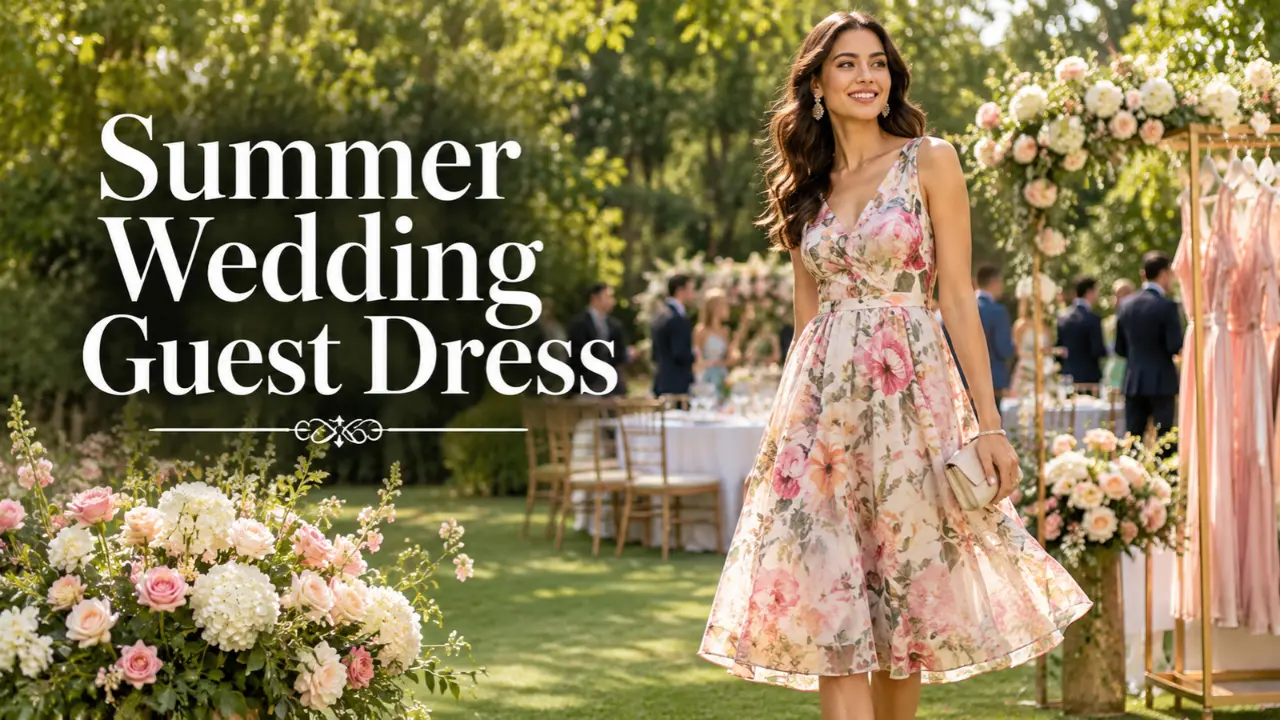
A summer wedding is not the place to sacrifice comfort for appearance. The best outfit should look polished in photographs, suit the atmosphere of the celebration, and remain comfortable from the ceremony through the final dance. Choosing a summer wedding guest dress requires more thought than picking an attractive colour or following the latest fashion trend. Fabric, length, venue, dress code, footwear, and even the time of day can change whether an outfit feels appropriate.
A beautiful dress that becomes uncomfortable after an hour is rarely a good choice. Lightweight materials, flattering cuts, and carefully selected accessories make a much stronger combination. The aim is to look like a well-dressed guest without competing with the bride or appearing overdressed for the occasion.
Choosing a Dress That Matches the Wedding Atmosphere
The venue should influence your outfit before you start considering individual dress designs. A countryside celebration, a beach ceremony, and an evening reception create different expectations. Wearing the same outfit to all three might be convenient, but it will not always feel suitable.
For a daytime garden wedding, floral prints, soft colours, and flowing silhouettes are excellent choices. A midi dress with a defined waist offers an attractive balance between formal and relaxed. It looks appropriate during the ceremony while allowing enough freedom to move around outdoor spaces.
Beach weddings call for lighter clothing. A flowing maxi dress in chiffon, georgette, or lightweight cotton can work particularly well. Avoid heavy layers and restrictive designs, especially when the ceremony takes place directly under the sun. A dress with comfortable straps and an easy-moving skirt is often more practical than a complicated fitted design.
Formal evening celebrations require a different approach. Satin dresses, elegant maxi styles, and sophisticated midi silhouettes can create a more refined appearance. Richer colours, subtle embellishments, and polished accessories help distinguish evening attire from a casual daytime outfit.
Before buying a summer wedding guest dress, check the invitation carefully. A black-tie event deserves a more formal outfit than a relaxed outdoor reception. The dress code is not a minor detail; it should guide the entire decision.
The Dress Styles Worth Considering
Not every fashionable design deserves a place in your wardrobe. A good wedding outfit needs to combine visual appeal with practical wearability. Certain silhouettes consistently perform well because they suit different settings without looking unnecessarily complicated.
Floral Dresses for Daytime Celebrations
Floral dresses are a natural choice for summer weddings, particularly those held in gardens, vineyards, or countryside venues. Small prints create a delicate appearance, while larger floral patterns make a stronger visual statement.
A floral midi dress with short sleeves or adjustable straps is particularly useful for daytime events. It can be paired with neutral sandals, a simple clutch, and understated jewellery.
The important detail is proportion. If the print is already bold, avoid accessories that compete with it. A balanced outfit usually looks more expensive than one filled with decorative details.
Midi Dresses for Versatility
Midi dresses are among the most practical options for wedding guests. Their length feels appropriate for formal occasions without creating the inconvenience that sometimes comes with floor-length designs.
A-line midi dresses are especially flattering because they provide movement without clinging tightly to the body. Wrap styles also deserve attention, as their adjustable waistlines make it easier to achieve a comfortable fit.
For guests attending a wedding that moves between indoor and outdoor spaces, a midi design is often the safest choice. It works with block heels, elegant flats, and traditional sandals.
Maxi Dresses for Formal Occasions
Maxi dresses bring a more dramatic appearance, making them suitable for evening receptions, formal ceremonies, and beach celebrations. Their success depends heavily on the fabric and cut.
A lightweight chiffon maxi dress creates a soft, flowing silhouette. Satin designs offer a more polished appearance, particularly when paired with delicate jewellery and refined footwear.
Avoid choosing a maxi dress simply because it looks impressive on a model. Check the length while wearing the shoes you intend to use. A dress that drags across the ground can become difficult to manage during an outdoor celebration.
Wrap and Satin Designs for an Elegant Finish
Wrap dresses are a strong option for guests who prefer adjustable clothing. Their waist definition creates a flattering shape, while the skirt usually allows comfortable movement.
Satin slip dresses offer a more understated form of elegance. A well-fitted design in navy, emerald, dusty rose, or champagne-inspired colours can look sophisticated without excessive decoration. However, guests should avoid shades and styling that resemble bridal attire, particularly white and ivory.
Why Fabric Matters More Than Decoration
Fabric can determine whether an outfit remains comfortable throughout a long summer celebration. A dress might look beautiful in a product photograph but feel completely different after several hours in warm weather.
Chiffon is one of the most useful materials for wedding guest clothing. Its lightweight structure creates movement, and layered designs can provide coverage without making the outfit feel excessively heavy.
Cotton is another practical choice, especially for daytime and outdoor celebrations. It allows air circulation and feels comfortable against the skin. However, heavily structured cotton dresses may look more casual, so the cut and finishing details matter.
Linen works particularly well for relaxed summer weddings. Its natural texture gives an outfit an effortless appearance, although it wrinkles more easily than many alternatives. Guests who prefer a perfectly smooth finish may find georgette or crepe easier to manage.
Silk offers a luxurious appearance and beautiful draping. It is an attractive option for formal occasions, but delicate silk garments may require additional care. Before choosing one, consider the weather, travel arrangements, and possibility of accidental spills.
Organza provides structure and a slightly dramatic finish. It works well for special-occasion dresses, although multiple heavy layers can become uncomfortable in high temperatures.
For a summer wedding guest dress, lightweight construction should take priority over elaborate decoration. Heavy embroidery, thick linings, and restrictive materials can make an otherwise attractive outfit difficult to wear.
Summer Colours That Look Elegant in Wedding Photographs
Colour influences the entire impression of an outfit. The right shade can complement the setting, work beautifully in natural light, and create a polished appearance without requiring complicated styling.
Sage green is an excellent choice for garden celebrations. It feels understated and pairs naturally with gold jewellery, nude footwear, and neutral handbags.
Dusty pink and soft peach offer a romantic appearance without looking excessively bright. These shades work particularly well for daytime ceremonies and floral settings.
Powder blue is another appealing option. It provides a fresh, refined look and can be styled with silver accessories or simple metallic sandals.
Butter yellow brings warmth to summer outfits. However, the shade should suit your complexion and the formality of the event. A softer yellow usually looks more sophisticated than an extremely bright version.
For evening weddings, emerald green, navy blue, and deep coral can create a more striking appearance. These colours work particularly well with simple silhouettes and carefully selected accessories.
White and ivory should usually be avoided unless the couple has specifically invited guests to wear them. The same applies to heavily embellished cream dresses that could easily be mistaken for bridal clothing. Wedding photographs last much longer than a fashion trend, so respecting the occasion matters.
Dressing for Beach, Garden, and Outdoor Weddings
Outdoor weddings introduce practical challenges that indoor celebrations rarely create. Wind, uneven surfaces, direct sunlight, and changing temperatures can affect your outfit throughout the day.
For beach celebrations, choose a dress that moves comfortably and does not require constant adjustment. A lightweight maxi or relaxed midi style is preferable to a tight skirt. Flat sandals are often more sensible than narrow heels, particularly when walking across sand.
Garden weddings require attention to footwear. Thin heels can sink into grass, making movement uncomfortable. Block heels and wedges provide better stability while maintaining an elegant appearance.
For countryside venues, consider the distance between the ceremony, reception, and dining area. A dress with a manageable length and comfortable construction makes moving between spaces easier.
Guests attending weddings in particularly hot locations should also think about sun exposure. Breathable sleeves, comfortable straps, and lightweight materials can make a meaningful difference. A small wrap or shawl may be useful if the reception takes place indoors with strong air conditioning.
A summer wedding guest dress should suit the environment rather than force you to spend the entire event adjusting your clothing.
Shoes and Accessories That Complete the Outfit
Accessories should improve an outfit, not compete with it. A carefully selected pair of shoes and a practical handbag can make a simple dress look considerably more polished.
For garden weddings, block heels are usually a better investment than narrow stilettos. They provide greater stability on grass and uneven surfaces. Wedges are another suitable option, especially when the dress has a relaxed or romantic design.
Beach celebrations call for flat sandals or low heels. Decorative sandals can still look elegant without creating unnecessary discomfort.
Evening weddings allow more freedom with footwear. Metallic heels, refined sandals, and classic pumps can complement satin and chiffon dresses particularly well.
Handbags should remain relatively small. A clutch or compact shoulder bag is usually sufficient for essentials such as a phone, lipstick, tissues, and personal items.
Jewellery depends on the dress itself. A floral outfit may need only small earrings and a delicate bracelet. A plain satin dress can support a more noticeable necklace or statement earrings.
Avoid wearing every accessory at once. A polished outfit needs a clear focal point. If the dress already has a dramatic neckline, decorative sleeves, or intricate detailing, keep the remaining elements simple.
Wedding Guest Etiquette That Should Never Be Ignored
Looking attractive is important, but wedding clothing also involves respecting the couple and the nature of the celebration.
The most important rule is to avoid wearing white or bridal-looking ivory unless the couple has specifically requested it. The bride should remain the central figure, and guests should not choose outfits that create unnecessary confusion in photographs.
Pay attention to the dress code. A casual dress may look out of place at a formal reception, while a heavily embellished gown can feel excessive at a relaxed daytime gathering.
Consider the religious and cultural setting as well. Certain ceremonies may expect covered shoulders, longer hemlines, or more modest clothing. Checking these expectations beforehand prevents awkward situations.
Transparency is another detail worth checking. Some lightweight summer fabrics can become more revealing under strong sunlight or camera flash. Try the outfit in natural lighting before the event, and choose suitable undergarments.
Finally, avoid clothing that requires constant adjustment. A dress that slips, rides up, or restricts movement can distract you from enjoying the celebration.
How to Choose a Dress You Can Wear Beyond One Wedding
Buying an expensive outfit for a single event is not always a sensible decision. A more useful approach is to choose a design that can work for other celebrations and occasions.
A simple midi dress in navy, sage green, or dusty pink offers greater styling flexibility than a heavily embellished statement gown. Changing the shoes, handbag, and jewellery can create a noticeably different appearance without purchasing another dress.
Pay attention to fit rather than the size printed on the label. Shoulder placement, waist position, bust support, and hem length all influence how a garment looks. If a dress fits well in most areas but needs a small alteration, tailoring may be worth considering.
Check the care instructions before purchasing. Delicate silk, intricate embroidery, and certain satin finishes may require special cleaning. A dress that is difficult to maintain might not offer good long-term value.
Price should also be considered alongside fabric quality and construction. An affordable dress with clean stitching and a flattering shape can look far more elegant than an expensive design with poor proportions.
The Best Summer Wedding Outfit Is the One You Can Enjoy Wearing
A successful wedding outfit should never feel like a performance that requires constant attention. The right summer wedding guest dress fits the occasion, handles the weather, and allows you to enjoy the celebration without worrying about every movement.
Start with the venue and dress code. Choose breathable fabric, select a flattering silhouette, and keep accessories appropriate to the setting. Floral midi dresses are excellent for daytime garden celebrations, flowing maxi designs suit beach occasions, and refined satin styles work beautifully for formal evenings.
Do not buy a dress simply because it looks impressive in a photograph. Choose one that feels right when you walk, sit, dance, and spend several hours wearing it. That is the difference between an outfit that looks good for a moment and one that genuinely works for the entire celebration.
Frequently Asked Questions
1. Can I wear a black dress to a summer wedding?
Yes. Black can be an elegant choice, particularly for evening and formal weddings. Select a lightweight fabric and consider softer accessories or metallic footwear to make the outfit feel appropriate for the season. However, check the invitation for any specific colour preferences.
2. Is a sleeveless dress appropriate for an outdoor summer wedding?
A sleeveless dress is usually suitable for an outdoor summer wedding, provided it matches the dress code and cultural expectations. If the ceremony requires more coverage, carrying a lightweight shawl or wrap is a practical solution.
3. How can I prevent a lightweight wedding dress from becoming transparent?
Check the material in direct sunlight before wearing it. Choose suitable skin-tone undergarments and consider a dress with an appropriate lining. If the fabric remains transparent, a professional tailor may be able to add a lightweight lining without changing its appearance.
4. What should I wear to a summer wedding when the weather forecast predicts rain?
Choose a dress that remains manageable in wet conditions, preferably a midi length rather than a floor-length design. Bring a compact umbrella, wear shoes with a stable sole, and carry a light cover-up. Avoid delicate footwear that could be damaged by wet grass or muddy paths.
5. Can I repeat the same wedding guest dress at different weddings?
Absolutely. Repeating an outfit is practical and perfectly acceptable. Change the accessories, hairstyle, shoes, or handbag to create a different overall appearance. A versatile dress with a simple silhouette is especially useful for attending several celebrations.