
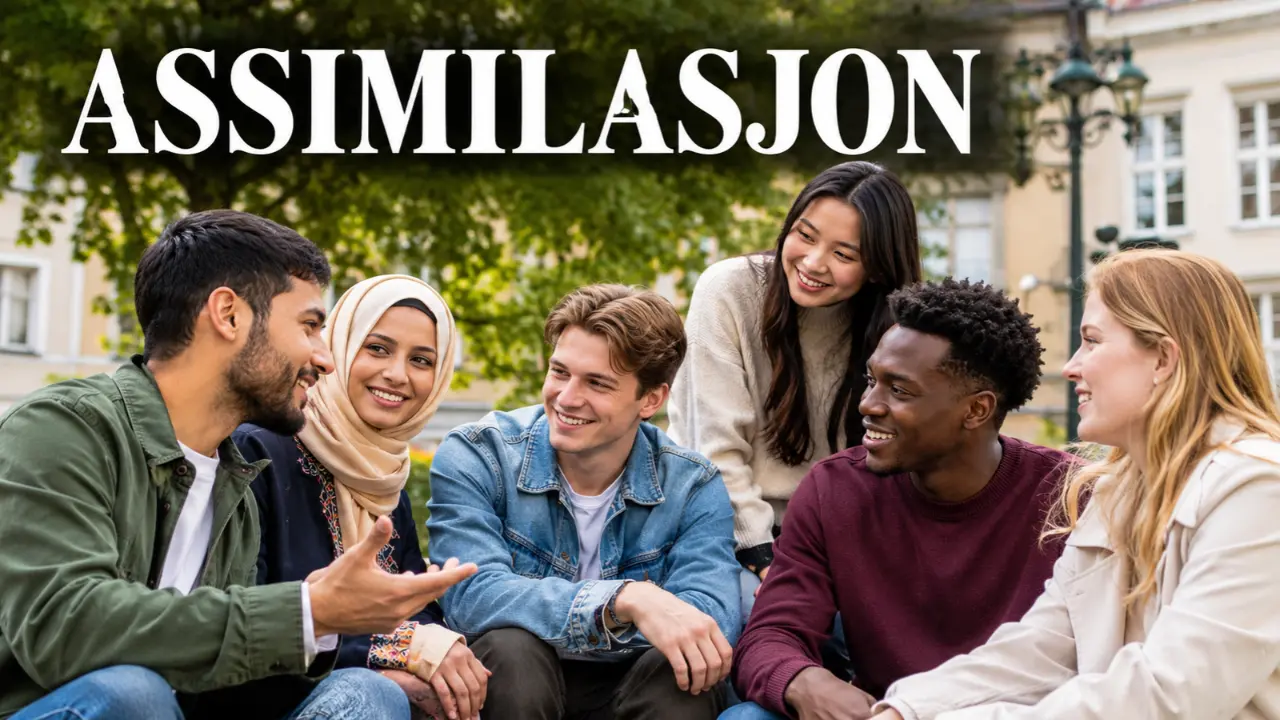
Assimilasjon becomes a difficult subject when society expects people to change who they are before accepting them. Learning a new language, understanding local customs, and participating in community life can create valuable opportunities, but cultural adaptation should never require people to abandon their heritage. The real challenge is finding a balance between belonging to a wider society and preserving the traditions, languages, and experiences that shape individual identity.
The subject deserves attention because assimilation affects everyday life in ways that are not always obvious. It influences how immigrant families communicate, how children develop their identities, how communities respond to cultural differences, and how governments approach minority populations. Understanding these effects requires looking beyond simple ideas about adapting to a new environment.
Understanding Assimilasjon in Social and Cultural Life
Assimilasjon is closely connected to changes in social behaviour, cultural practices, communication, and community relationships. It can happen when individuals or groups gradually adopt the customs and expectations of a larger population.
For example, someone moving from Pakistan to Norway may begin learning Norwegian, participating in local celebrations, following workplace customs, and becoming familiar with Norwegian social expectations. These changes can make everyday interactions easier and help that person participate more actively in the surrounding community.
However, adopting new habits does not necessarily mean abandoning an original culture. A family can celebrate Norwegian national traditions while continuing to observe Pakistani cultural celebrations at home. The situation becomes more complicated when acceptance depends on giving up familiar practices.
The distinction matters because cultural adaptation can happen through personal choice, social interaction, or external pressure. These experiences should not be treated as identical.
Assimilasjon also affects people differently depending on their age, education, family background, language abilities, and opportunities to interact with the wider population. A child growing up in a multicultural neighbourhood may experience cultural adaptation differently from an adult who moves abroad after spending decades in their home country.
The Different Forms of Assimilasjon
Assimilasjon does not happen in only one area of life. Cultural traditions, social relationships, language, and individual behaviour can all change through different processes.
Cultural Assimilasjon and Everyday Traditions
Cultural assimilation involves adopting practices associated with another cultural group. These practices may include food preferences, clothing, celebrations, communication styles, family expectations, and social customs.
Consider a family that moves to a country where people usually eat dinner earlier than they did in their previous home. Over time, the family may adjust its meal schedule because of school hours, workplace routines, and social activities.
This is a relatively simple example, but cultural changes can reach much deeper.
Young people may develop different interests from their parents. They may speak the local language more comfortably, prefer entertainment from their new environment, or develop friendships across cultural boundaries. Their parents may continue following familiar traditions while their children become comfortable with both cultural environments.
The most important question is whether these changes happen naturally or because individuals feel that their original identity is unwelcome.
Social Assimilasjon Through Community Participation
Social assimilation develops through relationships and participation in everyday community life.
Schools, workplaces, neighbourhoods, sports clubs, and local organisations provide opportunities for people from different backgrounds to interact. These environments can help newcomers understand social expectations and build relationships beyond their existing cultural circles.
For instance, an international student joining a local football club may gradually develop friendships with people who have different languages and backgrounds. Regular interaction can improve communication, create mutual understanding, and reduce feelings of isolation.
However, participation should work in both directions. A community that expects newcomers to make every adjustment while refusing to welcome cultural differences creates an unequal environment.
Linguistic Assimilasjon and Changes in Speech
Language plays a particularly important role in cultural and social adaptation.
In everyday society, learning the dominant language can help people communicate with teachers, colleagues, neighbours, public institutions, and service providers. It can also increase access to education and employment.
There is another meaning of linguistic assimilation within phonetics and linguistics. It describes a process in which one speech sound becomes more similar to another sound because of its influence.
For example, English speakers may pronounce the prefix in the word “input” with a sound influenced by the following consonant. Such pronunciation adjustments make speech easier to produce and occur naturally in connected language.
This linguistic process is different from cultural assimilation, even though both involve adaptation.
Psychological Assimilasjon and Personal Identity
Psychological assimilation concerns how individuals process new experiences and incorporate information into their existing understanding of the world.
When people encounter unfamiliar customs, beliefs, or social expectations, they may interpret these experiences through ideas they already understand. Over time, new experiences can influence their attitudes and behaviour.
For example, a child growing up in a multicultural classroom may gradually become comfortable with different religious celebrations, family traditions, and communication styles.
The psychological dimension is important because outward behaviour does not always reveal how someone feels internally. A person may follow local customs while still feeling strongly connected to their original cultural identity.
Assimilasjon and Integration Are Not the Same
Assimilasjon and integration are often discussed together, particularly in conversations about immigration and multicultural societies. However, they describe different expectations.
Assimilation places greater emphasis on adopting the cultural patterns of the majority population. In its stronger forms, it can involve pressure to reduce visible differences and leave traditional practices behind.
Integration focuses on participation in society while allowing individuals to retain meaningful parts of their original identities.
Imagine two families moving to the same European country.
The first family feels that becoming accepted requires speaking only the local language, abandoning traditional celebrations, and changing familiar cultural practices. The second family learns the local language, participates in community activities, and respects local laws while continuing to celebrate its original traditions.
The second experience is closer to integration.
This distinction is important because successful participation does not require cultural uniformity. People can share public institutions, educational opportunities, workplaces, and civic responsibilities without having identical backgrounds.
A healthy society should judge participation by people’s contributions and conduct rather than by how closely they resemble the majority population.
Historical Assimilation and the Experience of the Sami People
The history of the Sami people in Norway provides an important example of the consequences of forced cultural assimilation.
For generations, Sami communities maintained their own languages, traditions, livelihoods, and cultural practices across northern parts of Norway, Sweden, Finland, and Russia.
Norwegianization policies sought to make Sami communities adopt Norwegian language and culture. These policies affected education, public life, and the transmission of cultural identity between generations.
Schooling played a particularly significant role. Sami children experienced educational environments in which Norwegian language and culture were prioritised, while their own languages and traditions received limited recognition or were actively discouraged.
The consequences extended beyond classroom experiences.
When children cannot freely use their mother tongue or learn about their cultural heritage, the effects can continue within families for decades. Parents may struggle to pass traditional knowledge to their children, and younger generations may grow up with a weaker connection to their ancestral language.
The Sami experience demonstrates why forced assimilasjon should not be confused with voluntary cultural exchange.
Learning another language can create opportunities. Suppressing an existing language removes opportunities from future generations.
Norway’s history also shows that recognising past injustices is an important part of protecting cultural rights. Preserving Sami languages, traditions, and community institutions helps ensure that cultural identity remains part of the country’s living heritage.
Why People Experience Cultural Assimilation
People do not adapt to a new society for only one reason. Their circumstances, relationships, and personal ambitions influence how much their behaviour and cultural practices change.
Migration is one of the most visible influences. Individuals who move to another country often need to understand unfamiliar laws, educational systems, employment expectations, and communication practices.
Economic opportunities can also encourage cultural adaptation. Someone entering a new workplace may learn local professional etiquette, improve language skills, and adjust communication habits to work effectively with colleagues.
Education has a similar influence. Students who attend schools with children from different backgrounds become familiar with new perspectives through classroom discussions, friendships, and shared activities.
Family relationships can create another layer of change. Parents may prefer familiar traditions, while children develop stronger connections with the society in which they attend school and build friendships.
Social acceptance also matters. When people receive fair treatment and feel welcome, they are more likely to participate in community life. When they experience discrimination, they may withdraw from social interactions or feel pressured to hide parts of their identity.
These circumstances explain why cultural adaptation cannot be measured simply by how closely someone follows the majority’s habits.
The Benefits of Assimilasjon When Adaptation Is Voluntary
Cultural adaptation can offer practical advantages when people have the freedom to make their own choices.
Language learning is one of the clearest examples. Someone who learns the dominant language of their new country may find it easier to apply for jobs, communicate with teachers, understand public information, and build friendships.
Familiarity with local customs can also prevent misunderstandings. Understanding workplace expectations, appointment systems, social etiquette, and public responsibilities makes everyday activities easier.
Shared experiences can strengthen relationships between communities. Neighbours who participate in local events or parents who become involved in school activities often develop a better understanding of each other’s backgrounds.
These benefits are worth recognising.
However, they should not be used to justify cultural pressure. A person can learn the local language without rejecting their mother tongue. They can respect another society’s traditions without treating their own heritage as inferior.
The strongest form of cultural participation is one that creates opportunities rather than demanding personal sacrifice.
The Challenges of Forced Assimilation
Forced assimilation creates problems that can remain visible long after the original pressure has ended.
One major consequence is language loss. When children are discouraged from speaking their mother tongue, communication between generations can become more difficult. Traditional stories, expressions, and cultural knowledge may disappear when younger family members no longer understand the language.
Identity conflicts can also develop. People who grow up between different cultural environments may feel that they do not fully belong to either one. They might experience pressure to behave differently at home, school, work, or in public.
Discrimination makes the situation worse. If minority communities are treated unfairly because of their names, clothing, language, or traditions, adopting majority customs may not guarantee acceptance.
There is also a wider social cost. When communities lose languages and cultural practices through pressure, society loses part of its historical and cultural diversity.
The Sami experience illustrates these consequences particularly clearly. Cultural suppression does not simply change individual behaviour; it can affect families, communities, and collective memory.
For this reason, forced assimilasjon should be examined critically rather than presented as an ordinary requirement of living together.
Assimilasjon in Modern Multicultural Communities
Modern multicultural communities provide a useful setting for understanding how cultural identities change through everyday interaction.
Large cities often bring together people with different nationalities, languages, religions, and family traditions. Schools, businesses, public transport, and neighbourhood spaces become places where cultural exchange happens naturally.
Food is a familiar example. Restaurants introduce dishes from different countries, families experiment with unfamiliar recipes, and local communities develop new eating habits through shared experiences.
Language also changes through regular contact. People may learn expressions from friends, adopt local pronunciation patterns, or use more than one language depending on the situation.
These changes do not automatically represent complete cultural assimilation. They often demonstrate ordinary cultural exchange.
Multicultural communities work best when participation is supported by equal opportunities and respect. Public institutions should make it possible for people to access education, employment, and essential services without treating cultural differences as barriers to belonging.
This requires responsibility from both individuals and institutions. New residents should make reasonable efforts to understand the society they join, while established communities should avoid making acceptance conditional on cultural conformity.
How Families Can Preserve Their Heritage While Adapting
Families play a central role in determining whether cultural knowledge continues across generations.
Parents can support adaptation by encouraging children to learn the local language while also maintaining their mother tongue at home. Regular conversations, traditional stories, family recipes, and cultural celebrations help children understand where their family comes from.
Community activities can strengthen these connections. Cultural associations, language classes, festivals, and intergenerational gatherings provide opportunities to share traditions outside the home.
Children should also be allowed to explore the society around them. Restricting their friendships or educational experiences can make cultural differences feel like barriers rather than valuable parts of their identity.
The goal should not be to prevent cultural change. Every generation develops its own interests and experiences.
Instead, families should give younger members enough knowledge and confidence to make informed choices about their identities. A child who understands both family heritage and the wider society has more freedom to decide how those influences shape their future.
The Responsibility of Schools and Public Institutions
Schools and public institutions have a major influence on how assimilation develops.
Educational environments should help students communicate, understand civic responsibilities, and participate in society. Language support is particularly important for children who are learning in a new linguistic environment.
At the same time, schools should recognise that students arrive with different cultural experiences. Teachers can encourage respectful classroom discussions, address discrimination, and ensure that children are not made to feel embarrassed about their backgrounds.
Public institutions also have responsibilities. Fair access to employment, healthcare, education, and public services helps newcomers participate without unnecessary obstacles.
When institutions treat cultural diversity with respect, individuals have more freedom to adapt through personal choice rather than social pressure.
This approach benefits the wider community because it encourages cooperation without requiring everyone to share the same identity.
Conclusion: Belonging Should Never Require Cultural Erasure
Assimilasjon raises an important question about the relationship between individual identity and social belonging. Learning another language, respecting local customs, and participating in community life can create meaningful opportunities. But those benefits lose their value when people are expected to abandon their heritage to receive acceptance.
The history of the Sami people demonstrates the lasting damage that forced cultural change can cause. Their experience should remind societies that languages, traditions, and collective identities deserve protection.
A person should be able to build a life in a new society without having to erase the experiences that shaped them. Cultural adaptation should open doors, not close the ones leading back to family history and heritage.
The real measure of a welcoming society is not how successfully it makes everyone alike. It is whether people with different backgrounds can participate, contribute, and belong without losing the freedom to remain themselves.
Frequently Asked Questions About Assimilasjon
1. Can a person experience assimilation without moving to another country?
Yes. Assimilation can happen within a person’s own country when they move between communities with different languages, customs, or social expectations. For example, someone moving from a rural community to a large city may gradually adopt different communication styles, habits, and social behaviours.
2. Does learning a second language lead to cultural assimilation?
Not necessarily. Learning another language can improve communication and access to opportunities, but it does not automatically change someone’s cultural identity. A person can become fluent in a new language while continuing to speak their mother tongue and maintain traditional customs.
3. Why do children sometimes adapt faster than their parents?
Children often spend more time in schools, social groups, and activities where the dominant language is used. These regular interactions can help them become familiar with local communication styles and cultural expectations. Parents may have stronger connections to the traditions and language of the country where they grew up.
4. Can assimilation affect a person’s connection with their family?
Yes. Differences in language, values, interests, and social expectations can create misunderstandings between generations. Children may become more familiar with local customs than their parents, making communication about family traditions more difficult. Open conversations and shared cultural activities can help maintain these connections.
5. How can governments prevent harmful assimilation practices?
Governments can protect minority languages, support cultural education, enforce anti-discrimination laws, and provide equal access to public services. Recognising indigenous rights and allowing communities to maintain their traditions are also important steps. Public policies should encourage participation without forcing people to abandon their cultural identities.