
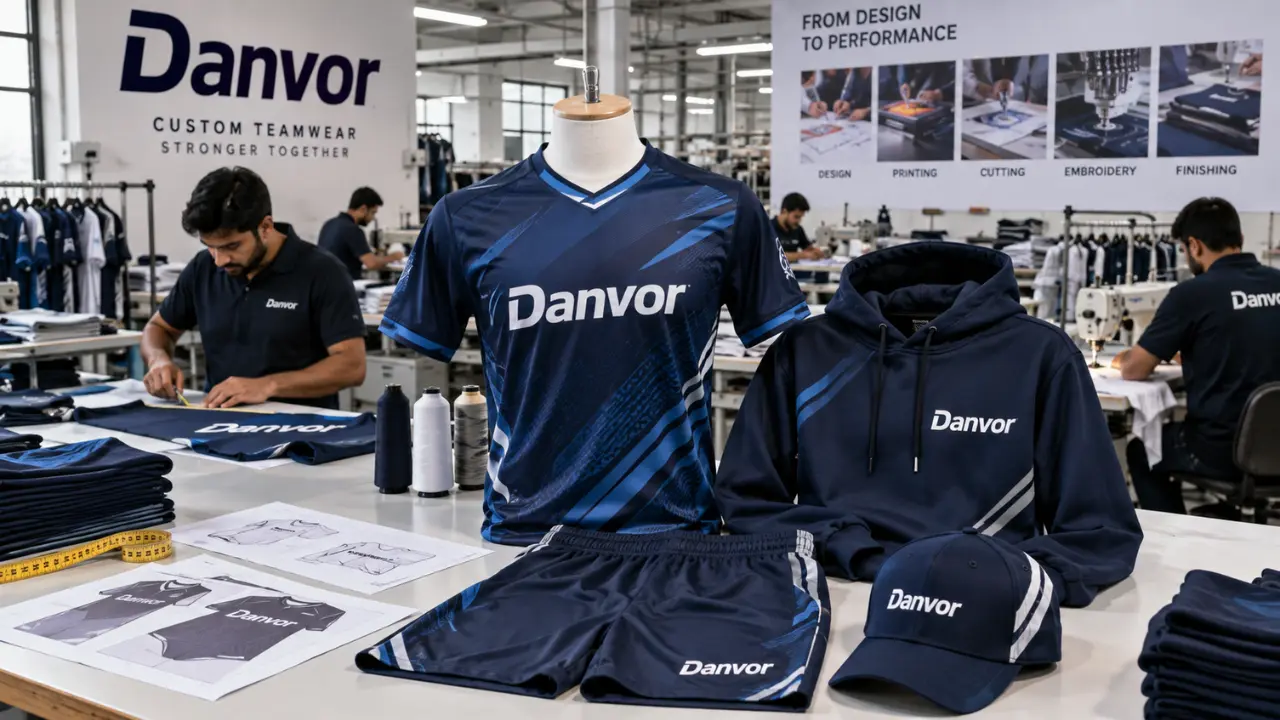
Choosing a sportswear manufacturer is not simply about finding a company that can put a logo on a shirt. Teams need clothing that fits properly, carries their identity, holds up during regular use and arrives according to the agreed specifications. This is where Danvor deserves a closer look. Its manufacturing activities focus on custom sportswear and teamwear, with production techniques that include sublimation printing, heat pressing, embroidery, fabric cutting and garment finishing. Based on its published information, Danvor is positioned around customized athletic clothing rather than ordinary ready-made apparel.
For sports teams, clothing brands and organizations looking for personalized uniforms, understanding how a manufacturer handles design, printing and production is just as important as looking at its finished products. Danvor’s association with Sialkot, Pakistan, also places it within a region known for sporting goods and garment manufacturing. However, buyers should look beyond a company’s location and examine its actual production capabilities before placing an order.
Danvor and Its Approach to Custom Sportswear Manufacturing
Danvor Industry operates in the custom sportswear and teamwear sector. Its published manufacturing information highlights the production of customized athletic clothing using different printing and garment-finishing methods. These processes allow sportswear to carry team colors, player names, numbers, logos and other visual details.
Custom manufacturing serves a different purpose from buying standard clothing. A football club, for example, might need matching jerseys for an entire squad, while a fitness brand could require clothing featuring its own design and branding. The requirements change depending on the customer, but the manufacturer must be able to translate those requirements into finished garments.
Danvor’s stated manufacturing activities cover several stages of this work. Design preparation, fabric cutting, sublimation printing, heat pressing and embroidery all contribute to the final appearance of a garment.
The quality of the finished product depends on how these stages are handled. A well-designed jersey can still disappoint if the fabric is uncomfortable or the printing does not hold up after washing. For that reason, customers should pay attention to production details rather than judging a manufacturer entirely by promotional photographs.
Sportswear Products Associated With Danvor
Custom sportswear is not limited to one type of uniform. Different sports and customer groups require different garment styles, materials and designs.
The product areas associated with Danvor include sports jerseys, team uniforms, hoodies, caps and customized clothing. Each category has its own manufacturing requirements.
Sports jerseys are among the most recognizable products in this market. Football, cricket and other sports teams often require uniforms that display club colors, player numbers, sponsor logos and individual names. The placement of these details needs to remain consistent across the complete order.
Team uniforms require similar attention. A club may need matching shirts and other clothing for players, coaches and support staff. Differences in sizing, design placement and garment specifications can create problems if production instructions are unclear.
Hoodies offer another type of customized apparel. Sports organizations can use them for training sessions, travel clothing and casual team merchandise. Unlike lightweight playing jerseys, hoodies require attention to fabric weight, stitching and comfort in cooler conditions.
Caps provide an additional branding option. They can carry embroidered logos, printed designs or other identifying details.
Customers interested in Danvor’s product range should request an updated catalogue before ordering. The availability of a particular style, fabric or customization option should be confirmed directly rather than assumed from general product descriptions.
How Danvor Handles the Sportswear Production Process
A custom garment passes through several stages before it is ready for delivery. Each stage has a direct effect on the appearance, fit and durability of the final product.
Design Preparation and Customization
Design preparation is the starting point for a custom sportswear order. The manufacturer needs accurate information about colors, logos, garment styles, sizes and printing requirements.
For example, a football club ordering 25 jerseys may require a different player name and number on every shirt. The club might also request a sponsor logo across the front and a smaller badge on the sleeve.
These details should be approved before production begins. A final design proof helps prevent misunderstandings about logo placement, colors and sizing.
Danvor’s customization activities are relevant to customers who want garments produced according to their own visual requirements rather than selecting standard retail designs.
Sublimation Printing
Sublimation printing is particularly useful for sports jerseys carrying detailed graphics and colorful designs.
The process uses heat to transfer specialized dye into suitable polyester fabric. Unlike a traditional surface print, the color becomes part of the fabric structure. This makes sublimation a practical choice for garments that need extensive graphics across large areas.
Sports teams often use this method for player numbers, patterns, gradients and club colors. It also allows manufacturers to create designs that would be difficult to achieve through basic screen printing.
For customers considering Danvor, it is worth asking which fabrics are suitable for its sublimation process. Polyester is commonly used because of its compatibility with sublimation dyes. The fabric weight, breathability and feel should also be checked before approving a bulk order.
Heat Press Customization
Heat pressing is another technique used in customized garment production.
It applies designs or materials to clothing through controlled heat and pressure. This method is commonly used for player names, numbers, badges and other decorative elements.
The finished result depends on the material being applied, temperature, pressure and pressing time. Incorrect settings can cause poor adhesion or damage the garment.
For a sports team, consistent application matters. If numbers begin peeling after a short period of use, the uniforms quickly lose their professional appearance.
Customers should ask Danvor which heat-applied materials it offers and whether it can provide samples before a larger order is approved.
Fabric Cutting and Garment Preparation
Fabric cutting is one of the stages that determines how a garment fits.
Manufacturers prepare fabric panels according to garment patterns and size specifications. Accurate cutting helps ensure that shirts of the same size maintain consistent proportions.
This becomes especially important when producing uniforms for an entire team. A difference in sleeve length, body width or collar shape can make matching garments look inconsistent.
Production planning should account for the required size distribution before fabric is cut. Customers should provide a clear size list and confirm the measurements used by the manufacturer.
Embroidery and Garment Finishing
Embroidery adds stitched designs to clothing. It is commonly used for club badges, company logos and other branding elements.
Unlike printed graphics, embroidered designs have a textured finish. This can make them suitable for caps, hoodies and selected sportswear garments.
The placement and size of an embroidered logo affect the appearance of the clothing. Large or poorly positioned designs can also affect comfort, particularly when placed against the skin.
The finishing stage includes preparing garments for inspection and packaging. Iron pressing can help improve presentation, but it should not be confused with a complete quality inspection. Stitching, printing, sizing and fabric condition still need to be checked.
Why Sialkot Matters to Danvor’s Manufacturing Background
Sialkot has a long-standing reputation as a manufacturing centre for sporting goods in Pakistan. Its industrial activities include sports equipment, apparel and related products supplied to domestic and international markets.
The city’s manufacturing environment is relevant when discussing Danvor because its business is associated with Sialkot.
A location within an established production centre can provide access to experienced garment workers, printing services, material suppliers and other manufacturing resources. These connections can support the production of customized sportswear.
However, location alone does not establish manufacturing quality. Two companies operating in the same industrial area can have very different production standards, equipment, materials and customer service.
Buyers considering Danvor should therefore assess its own facilities and capabilities. They should ask whether production takes place in its own workshop, whether any stages are outsourced and how finished garments are inspected.
These questions provide a more useful picture of a manufacturer’s operations than relying on the reputation of its city.
What Makes Custom Teamwear Different From Standard Sports Clothing?
Standard sports clothing is produced for general retail customers. It normally comes in predefined designs, colors and sizes.
Custom teamwear starts with a specific requirement. A club might need its own badge, sponsor branding, player numbers and a particular color combination. A business could require matching athletic clothing for an organized event or promotional activity.
This difference affects the entire production process.
The manufacturer must understand the customer’s artwork, prepare the design, select appropriate materials and produce garments according to agreed measurements. Even a small mistake in the artwork can affect an entire batch.
Danvor’s focus on customization makes these production details relevant to its potential customers.
A buyer should not approve an order based only on a digital design. The actual fabric, stitching and print quality can look different from what appears on a computer screen. Requesting a physical sample is a sensible step, especially for larger orders.
Quality Checks Buyers Should Expect From Danvor
Quality control should happen throughout manufacturing, not only after the garments have been completed.
The first check concerns the fabric. Buyers should examine its thickness, stretch, breathability and suitability for the intended activity. A jersey designed for regular football training has different requirements from a heavyweight hoodie.
Printing is another major consideration. Sublimation designs should have consistent colors and clear details. Heat-applied names and numbers should remain properly attached to the garment.
Embroidery should have clean stitching, accurate positioning and no loose threads. Garment construction also deserves attention. Seams, collars, sleeves and hems should be inspected for uneven stitching or loose sections.
Sizing is particularly important in teamwear orders. A manufacturer should follow an agreed measurement chart rather than relying only on generic labels such as small, medium and large.
Before ordering from Danvor, customers should ask about its inspection procedure and whether defective items can be replaced or corrected. These details should be agreed in writing.
What Customers Should Confirm Before Ordering From Danvor
A manufacturer may offer the right production techniques but still be unsuitable for a particular order. Buyers need to establish the commercial details before making a payment.
Start with the minimum order quantity. Some manufacturers accept individual custom pieces, while others work primarily with bulk orders. The minimum quantity can affect the cost of producing a small team uniform order.
Next, request a clear quotation. It should identify the garment type, fabric, printing method, customization details, quantity and delivery charges.
Production time also needs attention. A team preparing for a tournament cannot afford unexpected delays. Ask for an estimated completion date and clarify whether the quoted period includes sample approval and shipping.
International customers should confirm shipping arrangements, available delivery destinations, customs responsibilities and payment methods.
There are also important questions about artwork. Find out which file formats are accepted, whether design preparation is included in the price and whether changes can be made after approval.
For Danvor, customers should verify current pricing, order policies, production capacity and delivery terms directly. These details should not be assumed from a general description of its services.
Danvor’s Potential Role in the Custom Sportswear Market
The custom sportswear market serves professional teams, amateur clubs, schools, fitness businesses and independent clothing brands.
Each customer group has different priorities. A professional sports organization may place greater emphasis on technical fabric performance and consistent production. A school team might focus on affordability and durability. A clothing startup may care more about branding, garment presentation and order flexibility.
Manufacturers that understand these differences can serve customers with more specific requirements.
Danvor’s listed production techniques cover several of the main requirements of customized garment manufacturing. Sublimation provides detailed fabric graphics, heat pressing supports personalized designs and embroidery adds stitched branding.
The real test is how consistently these processes are delivered in completed orders.
A manufacturer should be judged by its actual products, production communication, delivery record and ability to meet agreed specifications. Promotional claims are only the starting point.
Frequently Asked Questions About Danvor
1. Does Danvor manufacture custom sports jerseys?
Danvor’s published business information identifies custom sportswear and teamwear manufacturing as part of its activities. Customers interested in specific jersey styles, materials and customization options should request its current product catalogue.
2. Can customers request their own team logos and player numbers?
Custom teamwear production commonly involves personalized logos, names and numbers. Danvor lists printing and customization processes that can support these requirements. Buyers should confirm the available methods and artwork specifications before ordering.
3. What printing methods are associated with Danvor?
Its published manufacturing information includes sublimation printing and heat pressing. These methods serve different purposes, so the appropriate option depends on the fabric, design and intended garment.
4. Is Danvor suitable for international sportswear orders?
Its association with Sialkot places it within Pakistan’s sporting goods manufacturing sector. However, customers should directly verify whether Danvor currently accepts international orders, which destinations it serves and what shipping arrangements are available.
5. What should buyers request before placing a bulk order with Danvor?
Buyers should request a product sample, fabric specifications, size chart, detailed quotation, minimum order quantity, production schedule and written quality or replacement terms. These details reduce the risk of receiving garments that do not match the approved design.
Conclusion
Danvor’s manufacturing activities bring together the processes that matter in custom sportswear production: design preparation, sublimation printing, heat pressing, fabric cutting, embroidery and garment finishing. Its connection with Sialkot also places the business within Pakistan’s established sporting goods manufacturing environment.
But production methods and location are not enough to establish a manufacturer’s reputation. Buyers need to see the finished garments, inspect the materials and understand the company’s order policies before committing to a large purchase.
For sports clubs, clothing businesses and organizations considering Danvor, the smartest first step is to request a sample and compare it against the actual requirements of the order. A manufacturer’s real value is not measured by what it says it can produce. It is measured by what arrives at the customer’s door.