
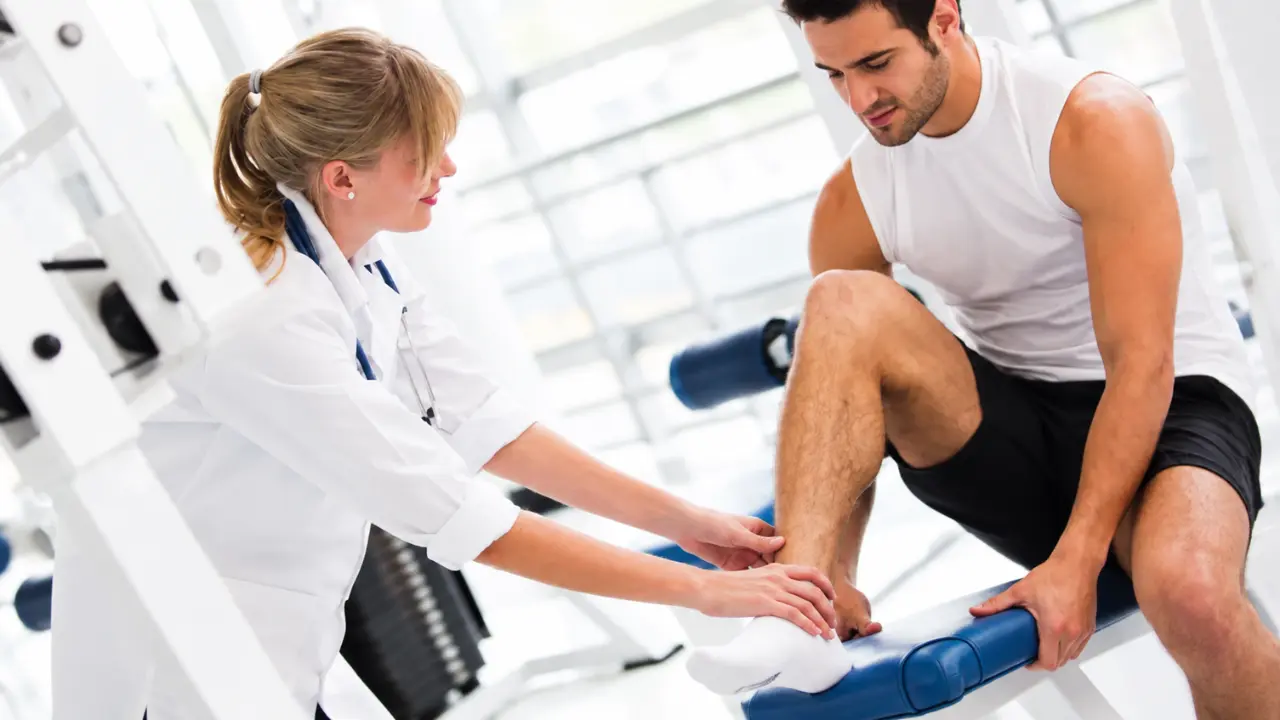
Kinervus stands out because it is not simply a general physiotherapy practice. Its work has a clear emphasis on rehabilitation, particularly neurological rehabilitation, while also covering pediatric care, manual lymphatic drainage, kinesiotaping, and structured group exercise. Based in Alken, Limburg, Belgium, the practice was established in 2019 by physiotherapist Stefanie Ver Eecken and has since developed into a group practice with several therapists and different areas of expertise.
For anyone considering physiotherapy or rehabilitation in the Alken area, the most useful thing to understand about kinervus is how its services are organized around individual needs. The practice works with people dealing with neurological conditions, movement difficulties, sports and musculoskeletal problems, childhood developmental challenges, and lymphatic issues. That broad but focused approach makes it worth examining each service separately rather than treating the practice as a standard physiotherapy clinic.
How Kinervus developed in Alken
Kinervus was founded in 2019 by Stefanie Ver Eecken, who chose physiotherapy and rehabilitation sciences because of her interest in the human body and working directly with people. Her main specialization became neurological rehabilitation. She later completed additional training in manual lymphatic drainage according to the Vodder method.
The practice was established in Alken, where Ver Eecken is originally from. That local connection is part of the story behind the practice rather than simply a detail about its address. The original focus has also expanded as the team has grown.
The current Kinervus team includes therapists with different specialties. These include neurological rehabilitation, pediatric rehabilitation, musculoskeletal and sports rehabilitation, manual therapy, dry needling, and other areas of physiotherapy.
That team structure matters because rehabilitation is rarely identical from one patient to another. A person recovering from a stroke needs a different treatment strategy from an athlete recovering from an injury, while a child with delayed motor development requires another type of support altogether.
Neurological rehabilitation is a major focus
Neurological rehabilitation is one of the clearest specialties at Kinervus. The practice works with people whose neurological systems have been affected by conditions involving the brain, spinal cord, or peripheral nerves. The clinic specifically lists stroke, multiple sclerosis, Parkinson’s disease, ALS, spinal cord injuries, brain trauma, neuromuscular diseases, peripheral injuries, and vertigo-related complaints among the situations it addresses.
The treatment approach centers on exercise therapy adapted to the person’s circumstances. Rather than focusing only on an impairment in isolation, the practice looks at everyday activities that have become difficult and considers where the patient needs additional support.
That distinction is important.
For someone recovering from a stroke, for example, the challenge may not simply be muscle strength. Getting out of a chair, turning in bed, maintaining balance, using one hand effectively, or walking safely can affect independence far more than a single strength measurement.
Kinervus describes neurological rehabilitation as a process aimed at helping patients maintain or improve their overall functioning and quality of life. In chronic neurological conditions, maintaining existing abilities can itself be an important treatment objective.
Group exercise has a practical role
Kinervus also offers structured group sessions, particularly for people with neurological conditions. These sessions are designed around specific physical and functional goals rather than being generic fitness classes.
The neurological program includes areas such as posture, balance, boxing, arm and hand function, and conditioning.
Balance sessions can focus on static and dynamic balance exercises, coordination, and movements that are relevant to everyday independence. Arm-and-hand sessions concentrate on practical abilities such as eating, writing, and personal care, while also working on coordination, strength, and motor control.
The boxing sessions are another interesting part of the program. They are intended particularly for people with Parkinson’s disease or multiple sclerosis and are not contact boxing. Participants work with equipment such as punching bags or pads while exercises can challenge strength, speed, coordination, endurance, balance, and cognitive functions.
For people who find conventional rehabilitation repetitive, this kind of structured group work can make physical activity easier to sustain. The social element also gives participants the chance to exercise around people dealing with comparable challenges.
Kinervus also has group exercise aimed at the broader population. Its Core+ program is designed for people with back-related needs and different fitness levels, with exercises targeting the abdominal, pelvic, and back muscles alongside general strength, flexibility, and mobility.
Pediatric rehabilitation takes a different approach
Children cannot simply be treated as smaller versions of adult patients. Their therapy has to account for development, attention, motivation, coordination, and the way children learn through movement.
Kinervus provides pediatric rehabilitation for children experiencing different motor and developmental difficulties. Its listed areas include preferred head or body positioning, laterality problems, psychomotor difficulties, handwriting problems, neuromotor conditions, and general delays in motor development.
The practice describes play as an important part of its pediatric approach. Exercises are adapted to individual needs and presented in an interactive way to encourage children to participate.
The clinic also mentions children with conditions such as cerebral palsy and spina bifida. For these cases, therapy can involve work on motor function while coordinating with other professionals in healthcare, education, and welfare when appropriate.
That multidisciplinary outlook is particularly relevant in pediatric rehabilitation because a child’s progress can affect school activities, handwriting, play, independence, and participation at home.
Manual lymphatic drainage is another specialization
Manual lymphatic drainage is another established service at Kinervus. The practice uses the Vodder method, which involves gentle massage techniques intended to influence the movement and drainage of lymphatic fluid.
Lymphatic problems can lead to an accumulation of fluid in tissues. Kinervus describes lymphedema as a condition associated with impaired lymphatic drainage and explains that manual treatment can be used to address excess fluid.
The technique offered at Kinervus uses gentle, rhythmic pressure along lymphatic pathways and nodes. Treatment duration and frequency are adjusted according to the patient’s complaint and circumstances rather than following one fixed schedule for everyone.
The practice also notes that bandaging or kinesiotaping may be used as supportive measures in appropriate cases.
This is an area where patients should avoid assuming that one treatment is suitable for every form of swelling. Persistent or unexplained swelling deserves proper medical assessment before a person decides on treatment.
Kinesiotaping is used for movement-related complaints
Kinesiotaping is another service available at Kinervus. The practice describes it as a supportive technique that can be used alongside physiotherapy for different complaints involving muscles, joints, tendons, ligaments, scars, bruising, and lymphatic problems.
Examples listed by the practice include back complaints, neck problems, knee issues, muscle problems, joint complaints, tendon problems, sprains, and bruising.
Kinesiotape should not be treated as a replacement for rehabilitation. Its useful role is more practical when it forms part of a wider treatment plan. The underlying problem still needs to be assessed, and exercise or other physiotherapy interventions may remain the central part of recovery.
The team brings different areas of expertise
One of the stronger aspects of kinervus is its team-based structure. The practice currently lists therapists with different professional interests and specializations.
Stefanie specializes in neurological rehabilitation and manual lymphatic drainage and also has further training in manual therapy and basic dry needling.
Annelien focuses on musculoskeletal and sports rehabilitation and has training related to adult neurological rehabilitation, manual therapy, and dry needling.
Tule specializes in pediatric rehabilitation, while Anse and Cécile have specializations involving neurological and pediatric conditions.
This mix makes the practice more than a single-specialist clinic. Someone looking for treatment can potentially be matched with a therapist whose experience fits the particular problem.
What happens before a first appointment?
Patients should make an appointment before attending. Kinervus says appointments can preferably be arranged by telephone, while contact forms and email can also be used. An online or email request is not considered final until the practice confirms it.
For a first visit, patients are asked to bring an identity card, a mutual-insurance sticker, and a doctor’s prescription. If they have a medical file or medication list, bringing those documents can also help the therapist prepare an accurate patient record.
Comfortable clothing and sports shoes are recommended for therapy sessions.
These details may seem minor, but they can make a first appointment easier. Arriving with the relevant documents and clothing means more time can be spent on assessment and treatment rather than sorting out basic practical issues.
Kinervus location and opening hours
Kinervus is located at Steenweg 121 Z/C, 3570 Alken, Belgium. The official contact page lists weekday opening hours from 8:00 AM to 8:00 PM, with Saturday and Sunday closed. Treatments are provided by appointment.
The listed telephone number is 011 78 11 78, while the practice provides blogservice2009@gmail.com as its email contact.
Patients should still confirm appointment arrangements directly with the practice rather than assuming that an advertised opening period means a therapist is available without an appointment.
What makes the practice different from a basic physiotherapy clinic?
The strongest point about kinervus is specialization.
A practice that offers only general physiotherapy may be perfectly suitable for a straightforward musculoskeletal complaint. But neurological rehabilitation, pediatric motor development, lymphatic treatment, and structured neurological exercise require more specific knowledge.
Kinervus has built its services around those areas while also maintaining broader physiotherapy and exercise options. The team’s range of specialties supports that structure.
Its neurological group sessions are particularly notable because they connect rehabilitation with everyday movement, conditioning, balance, hand function, and social participation. That is a more useful model for long-term rehabilitation than treating every appointment as an isolated exercise session.
The practice also states that its therapists continue professional training. On its neurological rehabilitation page, Kinervus says frequent further education helps keep treatment and treatment planning current.
Choosing the right service matters more than choosing a clinic name
Someone researching kinervus should start with the actual problem rather than simply asking whether the practice is “good.”
A patient recovering from a neurological condition should look at neurological rehabilitation and ask whether the therapist’s experience matches the condition and goals.
Parents should look specifically at pediatric rehabilitation and the child’s particular motor or developmental challenge.
Someone dealing with lymphatic swelling should discuss manual lymphatic drainage with an appropriate healthcare professional.
For back problems or general fitness, the Core+ group program may be more relevant than neurological services.
That distinction saves time. Physiotherapy is not one standardized treatment. The right intervention depends on the diagnosis, symptoms, functional limitations, age, goals, and medical history.
The practical takeaway for people considering Kinervus
Kinervus has built its identity around rehabilitation rather than trying to be everything to everyone. Its strongest area is neurological rehabilitation, but the practice also provides pediatric rehabilitation, manual lymphatic drainage, kinesiotaping, musculoskeletal and sports care, and structured group exercise. Kinervus
The most sensible way to approach the practice is to identify the problem first and then determine which therapist or service fits it. That is especially important for neurological and pediatric cases, where treatment needs can be highly individual.
For people in and around Alken looking for specialized physiotherapy, kinervus deserves consideration because its services are built around defined rehabilitation needs rather than a one-size-fits-all treatment model.
The real measure of a rehabilitation practice is not how many services it can list. It is whether those services are matched intelligently to the person sitting in front of the therapist. Kinervus’s emphasis on individualized goals, specialist rehabilitation, and functional movement gives it a clear position in the local physiotherapy landscape.
Frequently Asked Questions
Does Kinervus treat people with Parkinson’s disease?
Yes. Neurological rehabilitation at Kinervus includes patients with Parkinson’s disease. The practice also offers a specialized boxing-style group activity for neurological patients, with Parkinson’s and multiple sclerosis specifically mentioned as target groups.
What should I bring to my first Kinervus appointment?
The practice asks first-time patients to bring an identity card, a mutual-insurance sticker, and a doctor’s prescription. A medical file or medication list can also be useful if you have one. Comfortable clothing and sports shoes are recommended.
Can children receive physiotherapy at Kinervus?
Yes. Pediatric rehabilitation is one of the practice’s dedicated services. It covers issues including motor development delays, psychomotor difficulties, handwriting problems, neuromotor conditions, and certain neurological conditions affecting children.
Does Kinervus offer treatment for lymphatic problems?
Yes. Kinervus provides manual lymphatic drainage using the Vodder method. The practice says treatment duration and frequency are adapted according to the individual’s complaint and situation.
Do I need an appointment before visiting Kinervus?
Yes. Kinervus states that treatments are provided by appointment. Telephone contact is preferred because the appointment can be confirmed immediately, while requests sent through the website or email are only final after confirmation from the practice.