
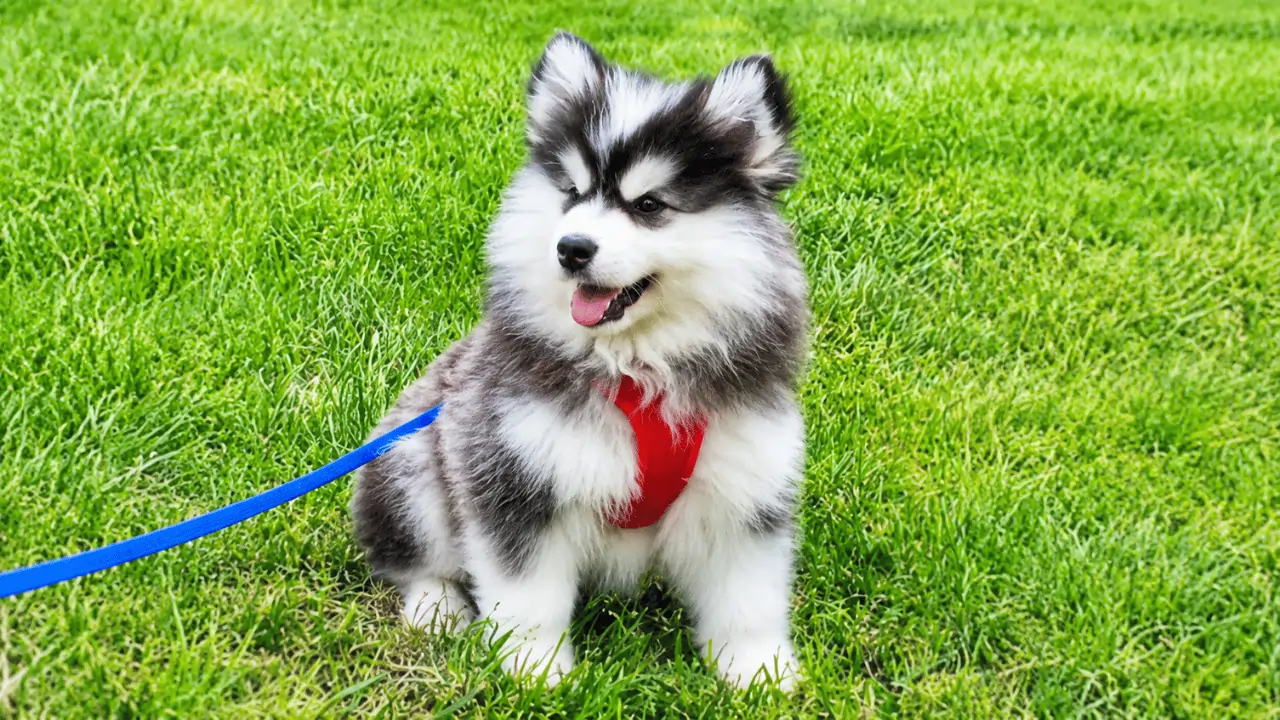
A pomerusky looks like the kind of dog that was designed to win people over in seconds: a compact body, thick coat, expressive eyes and the unmistakable influence of a Siberian Husky. But the appearance can be misleading. This is not a low-maintenance little lap dog that happens to look like a miniature Husky. A pomerusky can be intelligent, energetic, vocal, stubborn and surprisingly demanding, especially when it comes to exercise, training and coat care. Anyone considering one should judge the dog by its actual needs rather than by its size or photographs.
The name is also used for the Pomeranian and Siberian Husky cross more commonly called a Pomsky. The cross is relatively new, with the first recorded Pomsky litter dating to 2012, and its physical traits can vary because it is not a standardized purebred breed.
What Makes the pomerusky Different From an Ordinary Small Dog?
The most interesting thing about a pomerusky is the combination of two very different parent breeds. The Pomeranian is a small companion dog with a lively personality, while the Siberian Husky was developed as a working sled dog with substantial stamina and independence.
That combination can produce a dog that is physically smaller than a Husky but still carries a strong desire to move, explore and interact with its surroundings. A small house does not automatically mean a small workload.
The cross is also unpredictable in appearance. One puppy may look strongly Husky-like, while another may inherit more of the Pomeranian’s facial structure, coat or proportions. Even puppies from the same litter can develop noticeably different appearances.
That variability is one reason buyers should be careful about breeders promising an exact adult size, coat or personality before a puppy is mature.
How Big Does a pomerusky Get?
There is no single adult size that applies to every pomerusky. Parent size, breeding generation and individual genetics all play a role.
PetMD reports that adult Pomskies can range from roughly 12 to 35 pounds, while other breed references commonly place typical adults around 16 to 24 pounds. Height can also vary considerably, with reported ranges extending from around 10 to 18 inches at the shoulder.
That is a wider range than many prospective owners expect.
A person living in a small apartment might imagine getting a tiny dog that needs only short walks. That assumption can cause problems if the adult dog develops a more athletic Husky-like build and energy level.
Looking at the puppy’s parents is more useful than judging the puppy’s current size. Responsible breeders should be able to provide information about the adult weights and health history of both parents.
The Appearance Can Be Striking, but It Comes With a Coat to Manage
The classic pomerusky appearance combines Husky-like features with the smaller frame and fluffy qualities associated with the Pomeranian.
Coat colors can include combinations of black, white, gray, silver, red, sable and other shades. Eye colors may include brown, amber, green, gray or blue, and some dogs can have two different colored eyes.
The coat is usually a double coat. Reported coat types include standard, plush and wooly varieties.
That thick coat is one of the biggest practical considerations for an owner.
A pomerusky is not a good choice for someone who dislikes dog hair. Regular shedding is expected, and seasonal shedding can become considerably heavier. PetMD recommends brushing most Pomskies two to three times a week, with extra attention during shedding periods.
The areas behind the ears, around the elbows, behind the legs and around the armpits deserve particular attention because loose hair can collect there and form tangles.
Shaving the coat is also not a sensible shortcut. The double coat provides protection from environmental conditions, and PetMD specifically advises against shaving except when a medical condition or veterinary procedure requires it.
Temperament: Cute Does Not Mean Easy
A pomerusky can be affectionate and entertaining, but owners should be prepared for a strong personality.
The combination of Pomeranian and Husky traits can produce a dog that is intelligent, playful, alert, vocal and independent. PetsRadar describes the Pomsky temperament as intelligent, playful, stubborn and energetic.
That stubborn streak matters.
An intelligent dog does not automatically become an obedient dog. In fact, smart dogs can be excellent at finding ways around rules when training is inconsistent.
A pomerusky may understand what you want and still decide that another activity is more interesting.
That is why short, consistent training sessions tend to work better than occasional long sessions. Reward-based training can help keep the dog engaged without turning every interaction into a confrontation.
The Husky side can also contribute vocal behavior. Owners should be prepared for barking, whining, howling or other forms of communication rather than expecting a completely quiet companion.
Exercise Is More Important Than the Dog’s Size Suggests
One of the easiest mistakes to make with a pomerusky is assuming that a smaller body requires very little exercise.
That is not necessarily true.
Sources commonly describe Pomskies as moderate-to-high energy dogs, with daily activity and mental stimulation both playing important roles. PetMD notes that exercise can range from regular walks to much more active outings depending on the individual dog.
A useful routine can include a morning walk, interactive play, basic obedience practice and puzzle toys. An energetic individual may need more than that.
Exercise should also match the dog’s age and physical condition. A young puppy should not simply be pushed into long-distance running because it has Husky ancestry.
Mental exercise deserves equal attention. Teaching new commands, using food puzzles and changing walking routes can give an intelligent dog something to think about.
A bored pomerusky may find its own entertainment, and owners rarely appreciate the results.
Training Should Start Early
Early training is one of the strongest investments an owner can make.
The goal is not to turn the dog into a perfectly obedient machine. It is to establish habits before unwanted behavior becomes normal.
Basic commands such as sit, stay, come, leave it and drop it provide a useful foundation. Recall training is particularly important because a dog with independent tendencies should not be trusted off-leash simply because it seems friendly.
Socialization matters too. A puppy should gradually experience people, environments, sounds, surfaces and appropriately introduced animals.
Pomskies can get along well with people and other dogs, but interactions with cats and smaller pets deserve more care because individual dogs can have different prey-drive tendencies. PetMD recommends slow and supervised introductions where necessary.
Consistency is more valuable than harsh correction. If one family member allows a behavior while another constantly punishes it, the dog receives mixed instructions.
Grooming Is a Regular Responsibility
Grooming is not an occasional cosmetic job for a pomerusky.
The thick double coat needs routine brushing to remove loose hair and reduce tangles. During spring and fall shedding periods, grooming demands can increase significantly.
Bathing should be based on the dog’s condition rather than an arbitrary daily schedule. Regular nail trimming, ear checks and dental care should also become part of the household routine.
A good grooming routine has another benefit: it lets owners notice changes in the skin, coat, paws or ears before they become obvious problems.
If the dog hates brushing, start slowly when it is young. Reward calm behavior and keep early sessions short.
That is much easier than trying to force a fully grown dog through a grooming session it has learned to fear.
Health Questions Deserve More Attention Than Appearance
Because the Pomsky is a relatively new cross, long-term breed-specific health data is more limited than it is for established purebred dogs. PetMD gives a typical lifespan of about 12 to 15 years while also pointing out that there is not enough long-term information to establish every health risk with confidence.
Potential concerns reported in discussions of the parent breeds and the cross include patellar luxation, hip problems, dental problems, eye conditions, allergies or skin issues and tracheal problems.
That does not mean every pomerusky will develop these conditions. It means prospective owners should not accept vague claims that mixed breeding automatically guarantees perfect health.
The quality of the breeding program matters.
A responsible breeder should be willing to discuss health testing, veterinary records, the parents’ history and any known problems in previous litters. Buyers should be suspicious of sellers who focus entirely on eye color, coat pattern or unusually tiny size while avoiding health questions.
Why “Teacup” Claims Should Raise Questions
Extremely small Pomskies can be appealing to buyers who want a dog that remains tiny, but chasing the smallest possible puppy can create unnecessary health risks.
PetMD specifically warns against teacup Pomskies and links poor breeding practices aimed at extreme small size with concerns including patellar luxation, dental disease, heart disease and hydrocephalus.
The practical lesson is simple: do not make adult size the only thing you care about.
A healthy, appropriately bred dog with predictable care needs is a better choice than a fragile puppy marketed mainly because it is unusually tiny.
Can a pomerusky Live in an Apartment?
Yes, but the answer depends more on the owner’s routine than the size of the apartment.
A well-exercised pomerusky can adapt to smaller living spaces. A large house does not solve the problem of an under-stimulated dog either.
Apartment owners should pay particular attention to barking. A vocal dog can become a serious issue when neighbors are close by.
Daily walks, indoor games, training sessions and mental enrichment can make apartment life work. Leaving the dog alone all day with nothing to do is a much worse arrangement.
Secure doors and windows are also worth considering. Husky-influenced dogs can be curious and persistent when they see something interesting outside.
Is a pomerusky Good With Children?
It can be, but the individual dog’s temperament and the children’s behavior matter.
Families with older children who understand how to handle dogs safely may have an easier experience than households with very young children who cannot recognize when a dog wants space. Embrace Pet Insurance similarly describes Pomskies as better suited to families with older children.
Children should never be expected to manage the dog’s training or be left unsupervised with it.
The dog also needs a quiet place where it can retreat without being disturbed.
Good family behavior works in both directions: the dog learns boundaries, and the people in the household respect them.
What Should You Ask Before Buying a Puppy?
Do not choose a puppy based only on photographs.
Ask the breeder about the health testing performed on both parents. Ask how large the parents are, what their temperaments are like and whether previous puppies have experienced health problems.
You should also want to know how the puppies are being socialized.
A responsible breeder should be comfortable discussing these questions rather than treating them as an inconvenience.
Be particularly cautious if someone promises that a puppy will definitely remain a specific tiny size, will never shed, or will have a guaranteed personality. The genetics of a crossbreed do not allow that level of certainty.
Price can also vary significantly. PetMD cites a typical Pomsky price of about $2,500 to $5,000, depending partly on the parents, puppy quality and health testing.
The purchase price is only the beginning. Food, grooming, veterinary care, training, supplies and unexpected medical costs all belong in the ownership budget.
The Right Owner Is More Important Than the Perfect-Looking Puppy
The pomerusky makes sense for someone who wants an interactive companion and is prepared to put time into exercise, grooming and training.
It is a poor match for someone looking for a quiet, effortless dog that can spend most of the day alone.
That distinction matters more than whether the dog has blue eyes or a particularly Husky-like face.
The most attractive puppy in a photograph can become a difficult household pet if its owner’s lifestyle does not fit its needs. On the other hand, a well-socialized, appropriately trained individual can be an affectionate and entertaining companion for the right family.
The smart way to choose a pomerusky is to forget the “mini Husky” fantasy for a moment and look at the actual dog in front of you: its parents, temperament, energy level, health records and grooming requirements. If those details fit your life, the distinctive looks are simply a bonus. If they do not, no amount of cuteness will make ownership easier.
FAQs About Living With a pomerusky
Does a pomerusky need professional grooming?
Not necessarily for every appointment, but professional grooming can make coat maintenance much easier, particularly during heavy seasonal shedding. Owners still need to brush and inspect the coat regularly at home.
Can a pomerusky be left alone during a full workday?
That can be difficult for an individual dog that is strongly attached to its owners or has high energy. A dog left alone for long periods needs an appropriate routine, enrichment and bathroom breaks rather than simply being expected to sleep all day.
Are blue eyes guaranteed in a pomerusky?
No. Blue eyes are possible because of the Husky ancestry, but eye color can vary. Brown, amber, green, gray and blue eyes have all been reported, and some dogs can have different-colored eyes.
Does a pomerusky need a fenced yard?
A fenced yard can be useful, but it does not replace walks and mental stimulation. If the yard is not securely enclosed, allowing an independent, curious dog to roam freely is a poor idea.
What is the biggest mistake new owners make with a pomerusky?
Underestimating the dog because of its size. The compact body can hide a surprisingly active and opinionated personality. Owners who prepare for regular training, exercise, grooming and companionship usually have a much better starting point.