
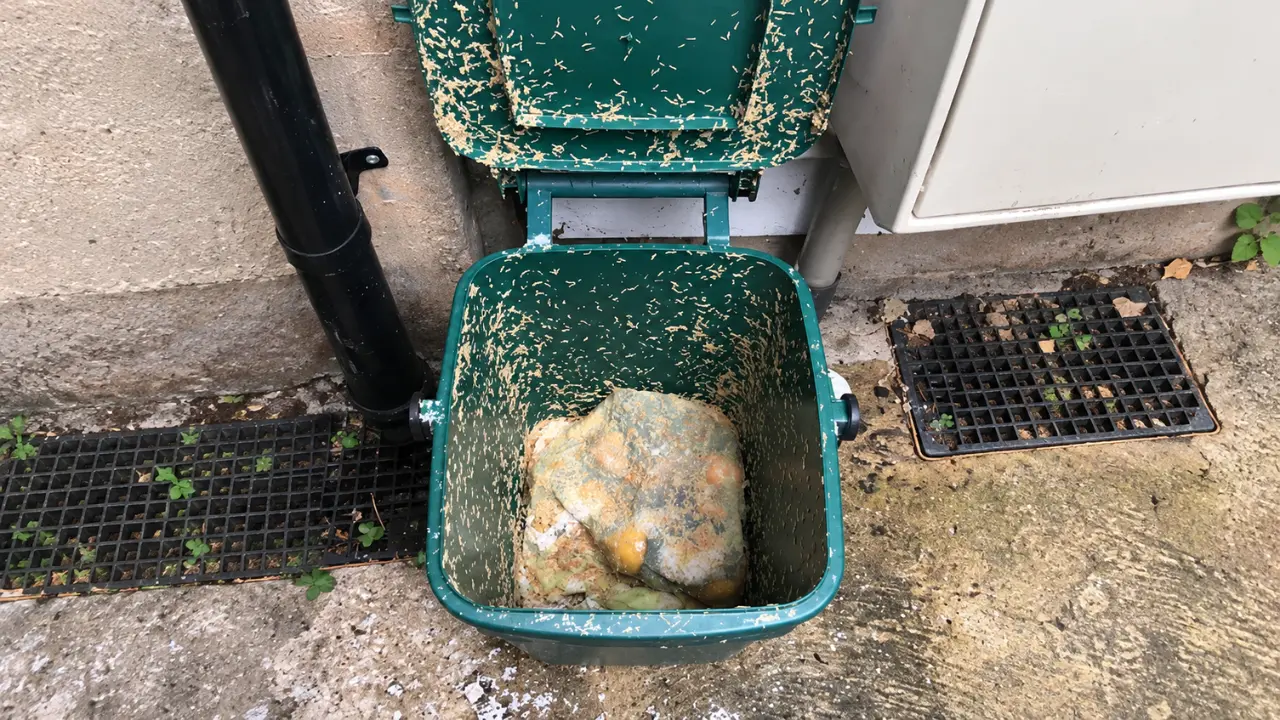
Hot weather exposes poor wheelie bin habits faster than almost any other household condition. A rubbish bin that seems perfectly manageable during cooler months can become unpleasant within a day when temperatures rise, food scraps begin decomposing, and flies find an easy place to lay their eggs. The problem of maggots wheelie bins hot weather is not simply about unpleasant-looking rubbish. It is closely connected to food storage, waste disposal, bin cleanliness, and how households manage organic waste during summer.
The biggest mistake is waiting until maggots appear before taking action. By that stage, flies have already found suitable breeding material, and the bin may contain food residue that continues attracting insects. Preventing the problem requires attention to a few everyday habits, particularly how food waste is packaged, where bins are stored, and whether their lids remain properly closed.
Why Hot Weather Makes Wheelie Bins More Vulnerable to Maggots
Temperature plays an important role in how quickly flies reproduce and how rapidly household waste decomposes. During summer, food scraps can deteriorate faster, producing strong smells that attract adult flies. Once flies reach suitable organic material, they may lay eggs that develop into larvae.
This explains why maggots wheelie bins hot weather becomes a recurring household concern during warmer months. The rubbish itself might not be particularly different from what a household throws away during winter, but the surrounding conditions change considerably.
Fly eggs can hatch within approximately 24 hours under favourable warm conditions. The exact timing depends on temperature, humidity, fly species, and the condition of the breeding material. Once the eggs hatch, larvae begin feeding on decomposing organic matter.
A wheelie bin containing leftover meat, fish, fruit, or other food scraps can provide an accessible environment for this development. If the bin remains warm and contains exposed food waste, the problem can progress before the next scheduled collection.
Heat also affects the smell of rubbish. Organic materials release unpleasant odours as they break down, and these smells can attract flies from the surrounding area. A bin positioned close to a kitchen door, patio, or outdoor seating area can quickly become a nuisance.
The Food Waste Mistakes That Attract Flies
Poor food waste management is one of the main reasons households experience maggot infestations. Leaving organic rubbish exposed gives flies an opportunity to access suitable breeding material.
Meat and fish scraps deserve particular attention. Their decomposition can produce strong smells, especially when they remain inside a warm bin for several days. Leftover poultry, seafood packaging, bones with attached meat, and food-soiled containers can all contribute to the problem.
Fruit and vegetable waste can also attract flies. Overripe fruit, vegetable peelings, and discarded food can create an environment that supports insect activity, particularly when mixed with other decomposing rubbish.
Another common mistake is placing food scraps directly into a wheelie bin without securing them properly. A loosely tied rubbish bag may split when waste is moved or compressed. Once food becomes exposed, flies can reach it more easily.
For households dealing with maggots wheelie bins hot weather, managing food waste should take priority over buying expensive cleaning products or trying different household remedies.
A practical approach is to:
- Place food scraps inside securely tied bags or suitable food waste liners.
- Keep meat and fish waste contained rather than leaving it exposed.
- Avoid putting leaking food packaging directly into the main bin.
- Empty indoor food waste caddies frequently.
- Follow local rules for storing and disposing of organic waste.
These measures reduce the amount of accessible food material and make the bin less attractive to flies.
Why an Open or Damaged Bin Lid Makes the Problem Worse
A wheelie bin lid is not just there to keep rubbish out of sight. It acts as a physical barrier between household waste and insects.
When a lid remains open, even slightly, flies can enter the bin and reach food scraps. A broken hinge, warped lid, damaged rim, or bin that is consistently overfilled can create the same problem.
Households sometimes overlook these defects because the bin still appears usable. However, a lid that cannot close properly offers little protection against flies.
Overfilling is another avoidable issue. When rubbish rises above the rim, the lid may remain partially open. This exposes the contents and allows unpleasant smells to escape more easily.
The problem becomes more noticeable during summer because flies are more active in warm conditions. Even a relatively small opening can provide access to exposed rubbish.
Anyone experiencing maggots wheelie bins hot weather should inspect the lid before assuming that cleaning alone will solve the issue. A damaged bin may need repair or replacement through the local waste collection service.
Keeping the lid fully closed between collections is one of the simplest ways to reduce fly access.
Where You Keep Your Wheelie Bin Matters
The position of an outdoor bin can influence how unpleasant it becomes during summer. A wheelie bin left in direct sunlight for most of the day can become considerably warmer than one stored in a shaded area.
Higher temperatures can accelerate the decomposition of organic waste, contributing to stronger smells. These odours can attract flies and make an existing hygiene problem more noticeable.
Moving a bin into a shaded location is therefore a sensible preventative measure. A sheltered area beside a wall, under an appropriate outdoor cover, or in a shaded section of the garden may provide better storage conditions.
However, shade alone will not prevent an infestation. A shaded bin containing uncovered meat scraps can still attract flies and develop maggots.
Good placement should also consider ventilation and accessibility. The bin needs enough space for collection workers to handle it safely, and it should not obstruct entrances, walkways, or neighbouring properties.
Households should avoid storing rubbish bins close to frequently used outdoor seating areas or kitchen windows when another suitable location is available.
For people dealing with maggots wheelie bins hot weather, the best arrangement combines shaded storage, a properly closed lid, and securely contained food waste.
How to Prevent Maggots in Wheelie Bins During Summer
Prevention works best when it becomes part of the normal rubbish disposal routine. Waiting until flies appear usually means dealing with an established hygiene problem rather than preventing one.
The most important step is controlling access to food waste. Securely tied bags prevent loose scraps from becoming exposed when rubbish is moved. Households should also avoid leaving food-soiled packaging open inside the bin.
Cleaning matters, but it should not replace proper waste storage. A freshly washed wheelie bin can attract flies again if it is immediately filled with uncovered food scraps.
Regular collection also makes a difference. If food waste remains inside a household bin for extended periods during hot weather, decomposition continues and unpleasant smells can build up.
Where separate food waste collections are available, using them correctly can reduce the amount of organic material stored in general household rubbish. Residents should check their local council’s rules because accepted materials and collection arrangements differ between areas.
A consistent summer routine should include:
- Checking that rubbish bags are securely tied before disposal.
- Keeping food waste separate where local collection services allow.
- Closing the bin lid immediately after use.
- Removing leaking packaging and cleaning food residue.
- Keeping the bin away from direct sunlight where possible.
- Checking for damaged lids, hinges, and openings.
These habits are particularly important for households that produce substantial food waste or have longer intervals between rubbish collections.
How to Deal With Maggots Already Inside a Wheelie Bin
Finding maggots inside a wheelie bin is unpleasant, but the situation can usually be managed through careful cleaning and better waste handling.
The first priority is to avoid unnecessary contact with the infested rubbish. Keep children and pets away from the area, and do not leave the bin open while deciding what to do.
If the bin has not yet been collected, follow the local council’s waste disposal guidance. Avoid transferring infested rubbish into other containers without proper containment.
After collection, inspect the empty bin for remaining food residue and visible larvae. Wear suitable protective gloves and footwear while cleaning, and use a cleaning product appropriate for the bin’s material.
Wash away remaining organic residue, paying attention to the bottom, corners, sides, and areas around the lid. These places can retain food particles and unpleasant liquid waste.
Once cleaning is complete, allow the bin to dry before placing new rubbish inside. Moisture and leftover food residue can contribute to continuing hygiene problems.
For persistent infestations, professional bin-cleaning services may be worth considering.
One important precaution concerns hot water and household cleaning chemicals. Avoid casually pouring boiling water into a wheelie bin because splashes can cause serious burns. Never mix bleach with acidic cleaners, ammonia, or other cleaning products, as dangerous gases can form.
When handling maggots wheelie bins hot weather, cleaning the empty container and removing the food residue is more useful than relying on a temporary treatment that leaves the underlying problem untouched.
Why Wheelie Bin Cleaning Should Not Be Left Until Collection Day
Many households only think about cleaning their wheelie bins when they begin to smell. This approach is understandable, but it allows food residue to accumulate between collections.
Small amounts of spilled food, liquid from packaging, and decomposing organic material can remain inside the container even after rubbish has been removed.
During warm weather, these leftovers can contribute to persistent odours and attract flies. A bin may look empty but still contain enough residue to create an unpleasant environment.
Cleaning after collection is a practical routine because the container is already empty. It also gives householders an opportunity to inspect the inside before adding another round of rubbish.
Particular attention should be given to the bottom of the bin. Liquids from food packaging can collect there, while small food particles may remain trapped in corners.
A suitable cleaning schedule depends on how frequently the bin is used, the type of rubbish it contains, and local conditions. Households that regularly dispose of meat, fish, and other food waste may need more frequent cleaning during summer.
The aim is not to wash the bin unnecessarily every day. It is to prevent residue from building up until unpleasant smells and fly activity become difficult to manage.
Can Maggots Return After a Wheelie Bin Has Been Cleaned?
Yes. Cleaning removes existing residue and larvae, but it does not guarantee that flies will stay away permanently.
If exposed food waste is placed inside the bin again, adult flies may return and lay more eggs. Similarly, a damaged lid or poorly secured rubbish bag can recreate the conditions responsible for the original infestation.
This is why maggots wheelie bins hot weather should be approached as an ongoing waste management issue rather than a one-time cleaning task.
A useful way to reduce repeat infestations is to examine what happened before the first appearance of maggots.
Was the bin left open? Did a rubbish bag leak? Was meat packaging placed inside without being secured? Had the container gone several weeks without cleaning?
Identifying the cause helps prevent the same problem from happening again.
Households should also remember that flies can reach rubbish in ways that are not immediately obvious. A bin that appears clean from the outside may still contain exposed food residue inside.
Regular inspections, proper bag sealing, and a functioning lid provide better long-term protection than repeatedly treating the same container.
How Poor Bin Hygiene Affects the Surrounding Household Environment
An infested wheelie bin can affect more than the container itself. Strong smells, increased fly activity, and leaking waste can make nearby outdoor spaces unpleasant.
This becomes particularly frustrating when bins are positioned near entrances, gardens, garages, or places where families spend time outside.
Flies can move between rubbish and other surfaces, which makes good household hygiene important. Food preparation areas, outdoor tables, and kitchen surroundings should be kept clean, especially when bins are stored nearby.
Leaking rubbish can also leave unpleasant residue on paving or concrete. Cleaning the surrounding area is therefore important when dealing with an infested container.
The issue is especially relevant in shared housing and communal bin areas. If several households use the same collection point, one poorly managed bin can contribute to unpleasant conditions for everyone.
Residents should avoid placing loose food waste beside communal bins or leaving rubbish outside containers. Such practices create additional opportunities for flies to reach decomposing material.
Good bin hygiene is a shared responsibility, particularly in warmer weather when waste can deteriorate quickly.
Conclusion: Control the Waste Before the Maggots Appear
Maggots in wheelie bins are rarely an unavoidable consequence of summer. Warm temperatures make the problem easier to develop, but exposed food waste, leaking bags, damaged lids, and neglected cleaning routines are the conditions that allow it to continue.
The most effective response is to stop treating bin hygiene as an occasional chore. Secure food scraps, close lids properly, store containers in shaded locations, and clean away residue after collection.
For households experiencing maggots wheelie bins hot weather, the real test is consistency. A clean bin today will not remain clean if the same waste disposal mistakes continue tomorrow. Deal with the cause, not just the visible infestation, and summer rubbish management becomes far easier.
Frequently Asked Questions
1. Can maggots develop in a wheelie bin overnight?
Maggots can appear surprisingly quickly during warm weather, but their development begins with fly eggs. Under favourable conditions, eggs may hatch within approximately 24 hours. The exact timing depends on temperature and other environmental conditions.
2. Why does my wheelie bin have maggots even when the lid is closed?
A closed lid does not guarantee that flies cannot access the rubbish. Damaged hinges, gaps around the rim, poorly secured bags, and exposed food residue can still contribute to an infestation. Inspect the container and check whether its lid closes properly.
3. Should I clean my wheelie bin after every rubbish collection?
Cleaning after collection is a sensible habit, particularly during summer when food residue can produce strong smells. The frequency depends on the waste inside, but removing leftover food particles and liquid residue helps maintain better hygiene.
4. Can maggots survive in an empty wheelie bin?
Maggots need suitable food and environmental conditions to continue developing. An empty bin with no accessible organic residue is less suitable for them. However, leftover food particles can remain inside even when the container appears empty, so proper cleaning is important.
5. What is the best way to stop maggots returning to my wheelie bin?
The best approach is to prevent flies from reaching food waste. Secure rubbish bags, separate food scraps where local collection services permit, keep the lid fully closed, and clean the container regularly. Repairing a damaged lid is also important because repeated infestations can continue if flies still have access.