
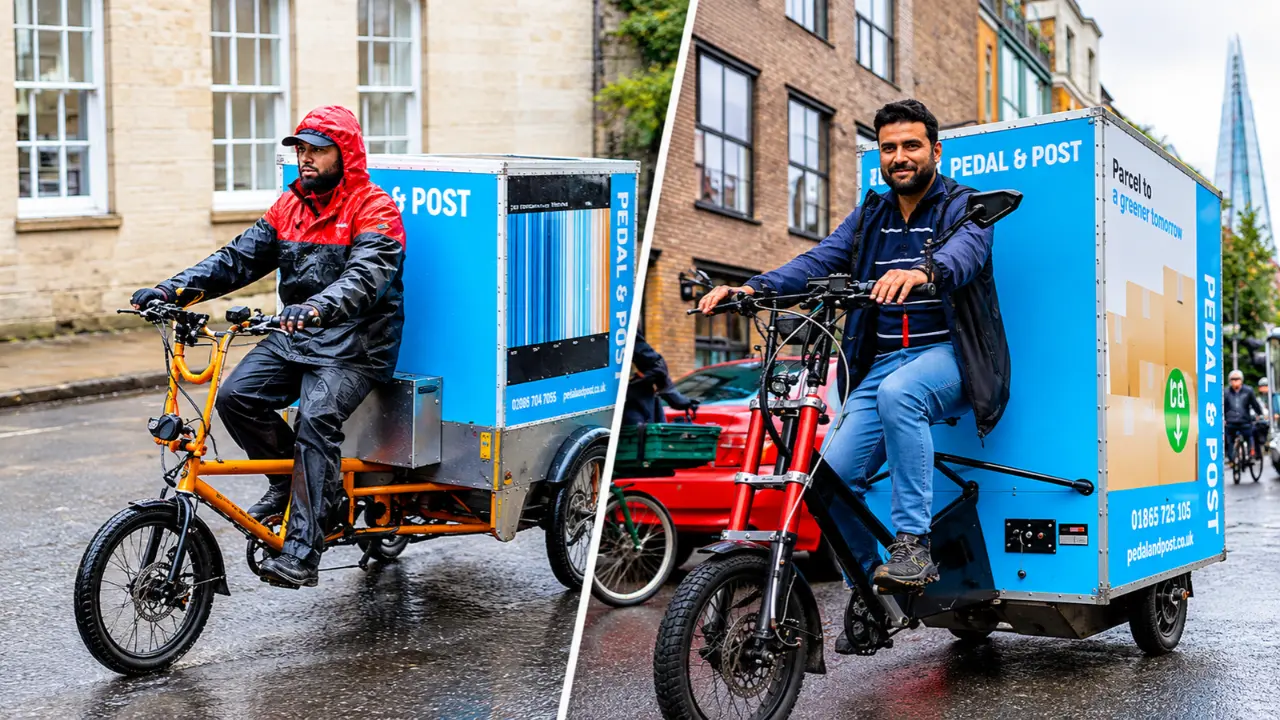
The closure of Pedal & Post is a disappointing reminder that a business can offer a genuinely useful service and still struggle to survive. For years, the Oxford-based courier company built its operations around bicycle deliveries, helping businesses move parcels and essential supplies without relying entirely on traditional delivery vans. Its approach made practical sense in busy urban areas, where traffic, parking restrictions, and environmental concerns create real problems for conventional couriers. Yet the pedal and post collapse showed that a promising delivery model cannot survive without dependable commercial relationships and sufficient financial support.
The company stopped trading in January 2026 after losing a major client, bringing an end to its operations in Oxford and London. Approximately 60 workers were affected, and the business subsequently entered creditors’ voluntary liquidation on 20 February 2026. Its closure deserves attention not only because of the employees and customers involved but also because it raises an important question about the financial pressures facing sustainable delivery companies.
How Pedal & Post Built Its Courier Business
Pedal & Post was founded in Oxford in 2013 by Christopher Benton. The company entered the delivery market with a straightforward idea: use cargo bicycles and low-emission transport to move goods through urban areas more efficiently.
Instead of depending exclusively on vans, its couriers used specially designed bicycles and electric cargo bikes capable of carrying parcels and commercial deliveries. This approach allowed the company to serve locations where conventional vehicles could face congestion, limited parking, and restrictions on access.
Oxford provided a suitable environment for this type of business. Its busy streets, established cycling culture, and compact urban areas created opportunities for bicycle-based logistics.
Over the years, Pedal & Post developed relationships with larger delivery operators and local commercial customers. Its work involved parcel distribution, business deliveries, and specialist transportation requirements.
The pedal and post collapse therefore marked the end of a business that had spent more than a decade developing an alternative approach to urban courier services.
Why Pedal & Post Expanded Beyond Oxford
Oxford was the company’s original operating base, but its ambitions extended beyond one city.
In 2025, Pedal & Post expanded into London, taking its bicycle delivery model into a much larger commercial market. London presented obvious opportunities for cargo-bike couriers. Busy streets, expensive parking, traffic restrictions, and concentrated business districts all created demand for alternative delivery methods.
For a courier company, being able to move parcels through crowded areas without depending on delivery vans can be a valuable advantage.
However, expansion also brings additional responsibilities. A company entering another city needs to manage staffing, equipment, operating arrangements, customer relationships, and daily delivery schedules. These requirements create financial pressure before a new location has established a dependable level of business.
There is no clear evidence that the London expansion directly caused the company’s closure. The reported loss of a major client was the central factor behind its decision to stop trading.
Still, the timing of the expansion provides useful context when considering the commercial difficulties surrounding the pedal and post collapse.
The Major Client Loss Behind the Closure
The most important reported reason for the company’s shutdown was the loss of a major customer.
According to reporting based on comments from founder Christopher Benton, the loss made continued operations financially unsustainable. The business explored ways to continue, but it could not identify a workable route forward.
This matters because courier companies often depend on commercial contracts to maintain predictable delivery volumes. A large customer can provide regular work that helps cover wages, equipment expenses, facilities, and other operating costs.
When that relationship disappears, the financial consequences can be immediate.
A delivery company cannot simply remove all its expenses when a major contract ends. Employees still need to be paid, equipment still requires maintenance, and existing operational commitments do not disappear overnight.
Media reports have associated Voi with the major client relationship involved in the closure. However, the founder did not publicly identify the client in his interview with Zag Daily, so the reported connection should not be presented as a direct confirmation from him.
The central issue remains clear: losing a significant source of business left Pedal & Post unable to sustain its operations.
The pedal and post collapse demonstrates why customer concentration can become a serious weakness for smaller logistics businesses. A company may have experienced couriers, useful equipment, and a recognised delivery service, but losing one important commercial relationship can undermine the entire operation.
The Delivery Services That Made Pedal & Post Different
Pedal & Post was not simply a bicycle courier service delivering occasional packages. Its operations covered several practical areas of urban logistics.
Parcel delivery formed an important part of its business. The company worked with larger delivery networks and helped transport packages through local delivery routes.
It also supported commercial customers that needed goods moved between businesses, distribution points, and final destinations. Bicycle couriers could be particularly useful in central urban locations where short-distance deliveries were difficult to manage using larger vehicles.
Another important part of its work involved medical logistics. Reports highlighted deliveries of essential medical supplies, including cancer medications for hospitals and NHS trusts.
That aspect of the company’s operations deserves particular attention. Medical deliveries are not ordinary retail transactions. They can involve time-sensitive supplies and require dependable handling arrangements.
The company’s use of cargo bicycles also addressed the last-mile delivery problem. This final stage of transportation is often one of the most difficult parts of parcel distribution because individual packages must reach separate addresses across busy neighbourhoods.
The pedal and post collapse consequently affected a business model that had demonstrated practical uses beyond ordinary parcel transportation.
Why Cargo Bike Deliveries Still Face Financial Challenges
Cargo bicycles offer real advantages, but their environmental benefits do not automatically make a courier business profitable.
A company operating a bicycle delivery fleet must still manage employee costs, maintenance, insurance, equipment purchases, storage, administration, and customer service.
Electric cargo bikes also require batteries, charging arrangements, repairs, and replacement components. These expenses may differ from those associated with delivery vans, but they remain part of the operating budget.
The financial challenge becomes harder when delivery volumes fluctuate.
A courier business needs enough paid work to keep its workforce and equipment productive. If a major customer suddenly withdraws a contract, the company may be left with operating capacity that it can no longer afford to maintain.
This is where the pedal and post collapse offers an important business lesson. Sustainable transportation can attract customers and support environmental goals, but a company still needs a reliable commercial structure.
In my view, the greatest weakness exposed by this closure was not the use of bicycles. It was the difficulty of maintaining financial stability when a major customer relationship disappeared.
A delivery model should be judged by its ability to serve customers consistently and cover its operating costs, not only by the environmental benefits it promises.
What Happened to the Employees and Delivery Customers?
The closure affected approximately 60 workers across the company’s Oxford and London operations.
For employees, the announcement meant the loss of work at a business that had spent years building its delivery network. The impact also extended to self-employed couriers associated with its operations.
Workers in the courier industry often depend on regular delivery assignments. When a company stops trading, those assignments can disappear quickly, leaving people to search for alternative employment or contracts.
Customers and commercial partners also faced disruption.
Evri, which had used bicycle courier services in parts of its delivery network, reported temporary disruption after its cycling delivery partner ceased operations. The company subsequently reorganised local deliveries and restored normal service.
This distinction is important. The pedal and post collapse did not mean that Evri itself had stopped operating. It meant that one of its delivery arrangements had been affected and alternative arrangements were needed.
For customers, the immediate concern was receiving parcels on time. For businesses, the situation highlighted the importance of having dependable delivery partners and contingency arrangements.
A courier partnership can work well for years, but companies should never assume that one supplier will remain available indefinitely.
Pedal & Post Liquidation: What Happened in February 2026?
Stopping trading and entering liquidation are separate stages, and the distinction matters when examining the company’s final months.
Pedal & Post ceased trading in January 2026. Its Oxford and London operations closed, and the business could no longer continue its normal delivery activities.
On 20 February 2026, the company entered creditors’ voluntary liquidation.
Creditors’ voluntary liquidation is a formal insolvency process used when a company is unable to continue financially and its shareholders decide to wind up its affairs. A liquidator is appointed to handle the remaining assets, investigate financial matters where required, and deal with creditor claims according to the applicable legal process.
The liquidation does not mean that the company’s delivery service simply changed its name or moved to another operator. It is part of the formal process of bringing the company’s affairs to an end.
The pedal and post collapse therefore involved both an operational shutdown and a subsequent legal insolvency procedure.
For readers following the business story, January and February 2026 represent two important dates: the end of trading and the formal beginning of liquidation.
How the Closure Affects Sustainable Delivery in the UK
The closure raises uncomfortable questions about the future of low-emission urban deliveries.
Cargo bicycles have a clear role in city logistics. They can access streets that are difficult for larger vehicles, reduce dependence on parking spaces, and avoid direct exhaust emissions during journeys.
They can also be effective for smaller deliveries over relatively short distances. In the right locations, a well-organised bicycle fleet can provide a practical alternative to conventional vans.
However, the closure of Pedal & Post shows that environmental value and financial survival are separate issues.
A sustainable delivery company must compete in a commercial market where customers expect dependable service, competitive prices, and consistent performance. If a business cannot maintain sufficient revenue, its environmental contribution cannot protect it from financial difficulties.
There is also a wider concern about the reliance of smaller delivery operators on large commercial contracts. Large logistics companies may have the resources to change suppliers or reorganise delivery arrangements, while a smaller specialist provider can find it much harder to replace a major source of income.
That does not mean bicycle delivery is an unsuccessful idea. It means the industry needs business arrangements that allow specialist operators to remain financially stable.
The pedal and post collapse should be viewed as a warning about commercial vulnerability, not proof that cargo-bike logistics has no future.
What Other Courier Businesses Can Learn From Pedal & Post
The first lesson is to avoid excessive dependence on one customer.
Large contracts can help a growing company establish regular revenue, but they also create risk when one relationship represents a substantial part of its business. Courier operators should work toward a broader customer base wherever practical.
The second lesson concerns expansion. Entering a new city may create opportunities, but expansion should be supported by realistic financial planning. Businesses need to understand the cost of staffing, equipment, facilities, and customer acquisition before increasing their operational commitments.
The third lesson is to maintain financial reserves. Delivery companies face changing parcel volumes, unexpected repairs, and shifts in commercial demand. Having sufficient financial flexibility can provide valuable time to respond when a major contract ends.
Finally, sustainable transport businesses must communicate their commercial value as clearly as their environmental benefits. Customers need to understand why a bicycle-based service is useful, reliable, and worth paying for.
These lessons are especially relevant to smaller operators competing against established delivery networks.
Frequently Asked Questions About Pedal & Post
1. Did Pedal & Post operate outside Oxford?
Yes. Oxford was its original base, but the company expanded into London in 2025. Its operations eventually covered both locations before the business stopped trading in January 2026.
2. Was Pedal & Post involved in medical deliveries?
Yes. Its reported activities included transporting essential medical supplies, including cancer medications for hospitals and NHS trusts. This was an important part of its specialist logistics work.
3. Did the closure affect other parcel delivery companies?
Yes. Evri reported temporary disruption to certain deliveries following the closure of its cycling courier partner. It reorganised local operations to restore normal delivery services.
4. Does liquidation mean the company’s bicycles and equipment disappeared?
No. Liquidation is a legal process for handling a company’s remaining assets and financial obligations. Its equipment may form part of the assets dealt with during that process.
5. Could another company replace Pedal & Post’s delivery model?
Other courier businesses can provide bicycle-based and electric cargo-bike delivery services. However, replacing the company’s exact operations, workforce, and commercial relationships would require separate business arrangements.
Conclusion: A Sustainable Idea Needs a Sustainable Business
The pedal and post collapse was not simply the end of a courier company. It exposed the gap between having a useful environmental purpose and building a business capable of surviving commercial setbacks.
Pedal & Post spent more than a decade developing bicycle-based delivery services, expanded into London, supported commercial customers, and carried out specialist medical deliveries. Yet the loss of a major client proved difficult to overcome, leading to the closure of approximately 60 workers’ roles and the company’s eventual liquidation.
The lesson is straightforward: sustainable transport cannot succeed on good intentions alone. It needs dependable customers, careful financial planning, and enough commercial resilience to survive unexpected changes.
Cargo-bike deliveries still have a place in the UK’s urban transport system. But if businesses want this model to grow, they must build companies that are as financially dependable as the services they provide.