
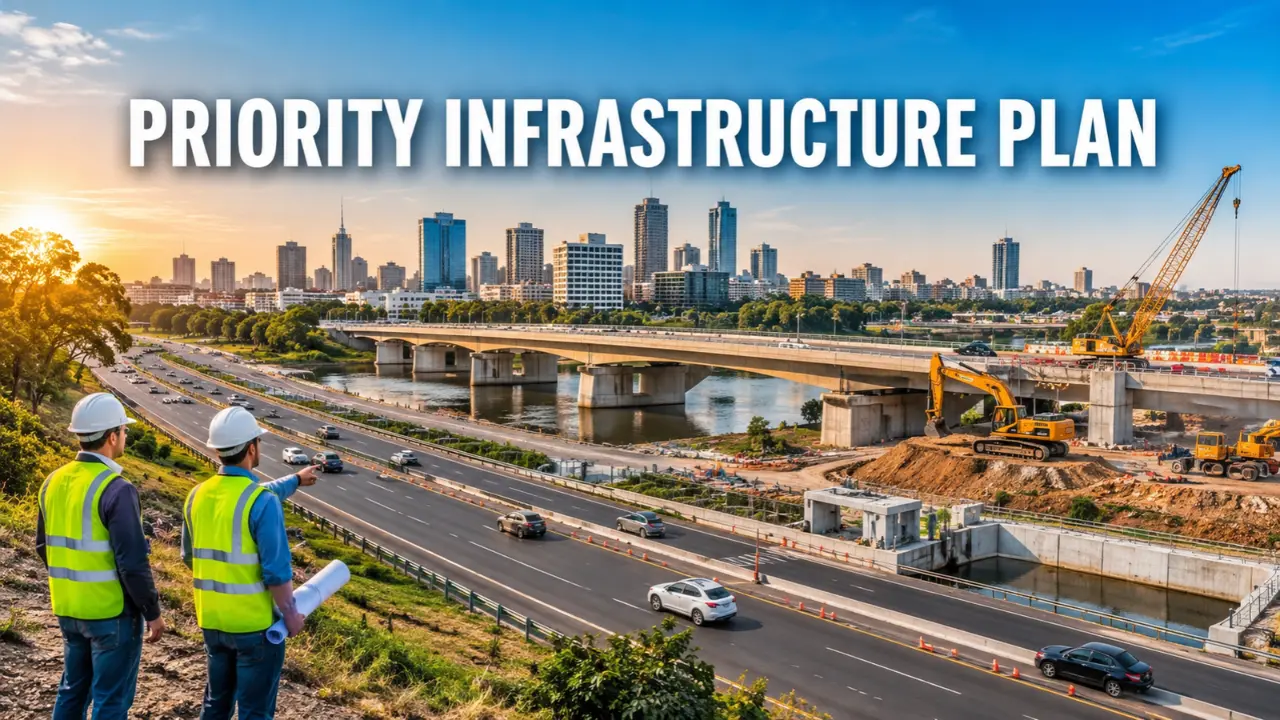
A city cannot grow successfully when its roads, water networks, electricity supply, and public services are constantly struggling to keep up. Building new houses and attracting businesses may create the appearance of progress, but without the infrastructure to support that growth, communities eventually face congestion, service interruptions, rising costs, and declining living conditions. A priority infrastructure plan helps address these problems by directing attention and investment towards the projects that matter most.
The real value of infrastructure planning is not measured by the number of projects announced or the amount of money allocated. It comes from choosing the right improvements at the right time. Governments must understand where communities are expanding, which services are under pressure, and what investments will produce lasting benefits. When these decisions are based on actual needs rather than short-term political interests, infrastructure development becomes more useful, affordable, and dependable.
Why Infrastructure Planning Needs Clear Priorities
Public infrastructure requires significant financial resources, skilled workers, land, and time. Governments cannot rebuild every road, replace every water pipeline, and expand every electricity network simultaneously. They must decide which projects deserve immediate attention and which can wait.
A priority infrastructure plan creates a basis for making these decisions. It allows planning authorities to examine existing conditions, identify service shortages, and assess how future development could affect local communities.
Consider a growing residential area where hundreds of new homes are being constructed. The development may look successful, but the surrounding roads might already experience heavy traffic. Water pressure may be unreliable, and the drainage network may not have enough capacity to handle additional households. If housing development continues without addressing these problems, residents will experience the consequences.
This is why infrastructure priorities should be established before major development takes place. Roads, utilities, public facilities, and drainage systems need to be considered together rather than treated as separate responsibilities.
The strongest plans also distinguish between urgent repairs and long-term expansion. A damaged bridge that carries essential commercial traffic may deserve immediate investment, while a proposed road extension serving a future development may be scheduled for a later phase.
How Governments Decide Which Infrastructure Projects Come First
Selecting infrastructure projects involves more than identifying what needs construction. Decision-makers must examine the seriousness of existing problems, the number of people affected, the cost of possible solutions, and the consequences of delaying investment.
A useful priority infrastructure plan considers several important factors.
First, public safety should receive serious attention. Roads with dangerous conditions, ageing bridges, inadequate drainage, and unreliable essential services can create immediate risks. Projects addressing these problems should not be delayed simply because larger developments appear more attractive.
Second, population growth matters. Areas experiencing rapid residential expansion often require additional transport capacity, water supply, electricity connections, and community facilities. Authorities should use population forecasts and development information to estimate future demand.
Third, economic importance deserves consideration. Roads connecting industrial areas, freight routes serving major businesses, and electricity networks supporting commercial activity can influence regional productivity. Infrastructure improvements in these locations may deliver benefits beyond the immediate project area.
Finally, authorities need to assess whether a project can realistically be delivered. Land availability, environmental approvals, construction costs, technical requirements, and funding arrangements all influence project readiness.
A project may be important but still require several years of preparation. Recognising this difference helps governments avoid announcing unrealistic construction schedules.
Transportation Infrastructure Deserves Early Attention
Transportation is one of the most visible parts of public infrastructure, and its weaknesses affect everyday life directly. Long commuting times, damaged roads, unsafe intersections, and unreliable public transport can reduce productivity and make communities less accessible.
Road maintenance should be treated as a major investment priority. Allowing small pavement problems to develop into serious structural damage usually increases repair costs. Regular maintenance, bridge inspections, improved road surfaces, and safer intersections can prevent larger expenses later.
Public transportation also deserves attention, particularly in growing urban areas. When bus services, railway connections, and transport terminals are poorly coordinated, people become more dependent on private vehicles. This increases congestion and places additional pressure on road networks.
A well-designed priority infrastructure plan should examine how different transport systems connect. Improving a major road without considering nearby public transport routes may solve one problem while creating another.
Freight transportation is equally important. Businesses depend on reliable connections between production centres, warehouses, ports, and markets. Delays along these routes can increase delivery expenses and disrupt supply chains.
Australia’s 2026 Infrastructure Priority List provides a useful example of national-level infrastructure planning. Published by Infrastructure Australia on 11 March 2026, it contains 68 infrastructure proposals and provides investment advice covering the next ten years. Its priorities include transport, freight networks, ports, water security, and clean energy.
The example demonstrates why infrastructure decisions should consider national economic needs rather than focusing exclusively on individual construction projects.
Water Supply and Drainage Cannot Be Left Behind
Water infrastructure rarely receives the same public attention as highways or major buildings, but its importance is difficult to overstate.
A growing community needs a reliable supply of clean water. It also needs wastewater systems capable of handling increasing demand. Without sufficient capacity, residential expansion can place pressure on existing networks and create public health concerns.
A priority infrastructure plan should examine the condition of existing pipelines, treatment facilities, pumping stations, and water storage systems. Authorities also need to understand whether current facilities can support projected population growth.
Drainage deserves equal consideration.
Poor stormwater management can cause flooding, damage buildings, disrupt transportation, and create expensive maintenance problems. New developments may increase the amount of paved land, reducing the natural absorption of rainfall. If drainage systems are not upgraded accordingly, even ordinary heavy rainfall can create serious difficulties.
In areas exposed to flooding, investment should focus on practical protection measures. These may include improved drainage channels, retention areas, upgraded culverts, and better management of surface water.
Water security is also becoming an important planning consideration. Regions facing drought, changing rainfall patterns, or growing demand need infrastructure capable of supporting reliable supplies over the long term.
Electricity and Digital Networks Support Modern Communities
Electricity is essential to almost every part of modern economic and social activity. Homes need dependable power, hospitals require uninterrupted electricity, and businesses depend on reliable energy to operate equipment and maintain services.
When electricity networks cannot meet demand, the effects extend beyond inconvenience. Production can stop, operating expenses can rise, and essential public services may face disruption.
Infrastructure authorities should assess existing network capacity, equipment condition, transmission requirements, and expected future demand. Investments in substations, transmission lines, distribution systems, and renewable energy connections may be necessary as communities expand.
Digital infrastructure deserves the same level of planning attention.
Reliable broadband and telecommunications networks support education, remote working, business operations, public administration, and emergency communication. Communities with limited digital access can face disadvantages when essential services increasingly move online.
A priority infrastructure plan should therefore account for both physical and digital connectivity. Building a new commercial district without sufficient telecommunications capacity can create problems that are expensive to correct later.
The objective should not be to install the newest technology simply because it is available. Investment should address identifiable service gaps and provide reliable capacity for the people and organisations that depend on it.
Funding Decisions Determine Whether Plans Become Reality
An infrastructure proposal has little practical value if its funding arrangements are unclear.
Large public projects can require years of financial preparation. Governments must balance construction expenses against existing public commitments, maintenance requirements, and future operating costs.
A responsible priority infrastructure plan should establish realistic funding expectations before construction begins.
Government budgets remain a major funding source, particularly for essential services and public facilities. However, private investment and public-private partnerships can also support infrastructure development when responsibilities and financial risks are clearly defined.
These arrangements require careful evaluation. Private financing does not automatically make a project cheaper or more efficient. Governments need to understand borrowing costs, contractual obligations, service standards, and long-term payment commitments.
Maintenance funding is another issue that deserves greater attention. New construction often attracts public interest, while routine maintenance receives less recognition. Yet an infrastructure project that cannot be maintained properly may become a financial burden.
For example, constructing a new road without allocating money for resurfacing, drainage maintenance, and safety inspections creates avoidable future problems.
Financial planning should cover the entire life of an asset, not just the initial construction period.
Queensland Shows How Local Planning Connects Development With Infrastructure
Queensland, Australia, offers a useful historical example of infrastructure planning connected with urban growth.
Its former Priority Infrastructure Plan framework linked development expectations with the infrastructure needed to support expanding communities. Planning considerations included Priority Infrastructure Areas, Desired Standards of Service, and plans for trunk infrastructure.
These elements helped local authorities consider where development should occur, what level of public services should be provided, and how essential infrastructure could be delivered.
Queensland’s current planning framework uses Local Government Infrastructure Plans, which continue to connect development planning with infrastructure capacity and financial considerations.
The practical lesson is important: local infrastructure decisions should be based on realistic development patterns.
If authorities approve residential and commercial expansion without examining existing service capacity, infrastructure shortages can emerge long before the development reaches its full size.
Local planning is therefore essential to the success of a broader priority infrastructure plan. National investment priorities may identify important transport or energy projects, but local authorities must ensure that neighbourhood roads, water networks, and public facilities can support the resulting growth.
The Biggest Challenges That Can Delay Infrastructure Projects
Even carefully selected projects can encounter serious difficulties during implementation.
Rising construction costs are a major concern. Changes in material prices, labour availability, transportation expenses, and equipment costs can affect project budgets. When financial estimates are unrealistic, governments may need to reduce project scope or postpone construction.
Land acquisition can create another obstacle. Road extensions, railway developments, drainage improvements, and utility corridors may require access to privately owned property. Negotiations and legal procedures can extend project timelines.
Environmental approvals also require attention. Infrastructure construction can affect natural habitats, water resources, agricultural land, and nearby communities. Proper environmental assessments help identify these risks before construction begins.
Coordination between government departments can be equally difficult. A road project may depend on electricity relocation, water pipeline upgrades, drainage improvements, and telecommunications work. If these activities are scheduled independently, delays and repeated excavation can increase costs.
A strong priority infrastructure plan should establish clear responsibilities, realistic schedules, and regular progress reviews. Public reporting also matters because communities deserve to know whether promised improvements are being delivered.
Sustainable Infrastructure Requires Decisions That Last
Infrastructure should serve communities for decades, not just meet immediate political or development targets.
Climate-related risks make long-term planning particularly important. Flooding, extreme heat, water shortages, and severe weather can damage infrastructure and interrupt essential services.
Governments should consider these conditions when selecting construction materials, designing drainage systems, locating facilities, and upgrading existing networks.
Renewable energy connections, energy-efficient public buildings, water conservation systems, and improved public transportation can also contribute to more sustainable development.
However, sustainability should be judged through practical results. A project should not receive priority simply because its proposal includes environmental language. Authorities need to examine measurable benefits, expected costs, environmental effects, and long-term performance.
A priority infrastructure plan should also consider the needs of future generations. Constructing facilities that become inadequate within a few years is poor planning, even when the original project appears affordable.
The better approach is to combine immediate improvements with realistic preparation for future demand.
What the Future of Infrastructure Planning Should Look Like
Infrastructure planning will increasingly depend on accurate information and stronger coordination.
Population projections, traffic studies, asset inspections, geographic information systems, and financial assessments can help authorities understand where investment is most urgently needed.
Digital monitoring can also improve the management of existing infrastructure. For example, sensors may help identify pressure changes in water networks, while monitoring systems can provide information about bridge conditions and traffic movement.
These technologies are useful when they support clear decisions. Collecting large amounts of information is not enough if authorities cannot translate the findings into practical improvements.
Public involvement should also become a normal part of infrastructure planning. Residents often understand local problems that may not appear clearly in national reports or broad development forecasts. Their experiences can help identify unsafe roads, unreliable water services, drainage problems, and transport gaps.
The future success of a priority infrastructure plan will depend on how well governments connect technical evidence with real community needs.
Infrastructure Success Should Be Measured by What People Experience
The success of infrastructure development should never be judged solely by construction spending, project announcements, or the number of completed buildings.
A better measure is whether people experience meaningful improvements in everyday life.
Can workers reach their workplaces more reliably? Do businesses receive goods without unnecessary delays? Can households access dependable water and electricity? Are roads safer, drainage systems more effective, and public services easier to reach?
These are the questions that should influence public investment decisions.
A priority infrastructure plan is valuable only when its priorities translate into functioning services and lasting improvements. Governments must be willing to repair neglected assets, delay projects that are not financially realistic, and direct investment towards communities facing the greatest infrastructure shortages.
Building more is not always the answer. Building what is needed, maintaining what already exists, and spending public money responsibly are far better measures of progress.
The real test of infrastructure planning is simple: people should be able to see the difference in their daily lives, not just read about it in a government announcement.
Frequently Asked Questions
1. Who is responsible for preparing a priority infrastructure plan?
Responsibility usually rests with local councils, regional planning authorities, or government infrastructure departments. The exact arrangement depends on the country’s planning laws and administrative structure. Technical teams, utility providers, financial departments, and community representatives may also contribute.
2. How often should infrastructure priorities be reviewed?
There is no universal review period. However, authorities should reassess priorities when population forecasts change, major developments are approved, construction costs increase significantly, or existing infrastructure experiences unexpected problems. Regular reviews help keep investment decisions relevant.
3. Can smaller communities benefit from infrastructure priority planning?
Yes. Smaller towns can use infrastructure planning to identify road maintenance needs, improve water access, upgrade drainage, expand electricity connections, and strengthen digital services. A smaller project can have a significant local impact when it addresses an essential service shortage.
4. What happens when an infrastructure project is delayed?
Delays can increase construction costs, postpone public benefits, affect connected projects, and create additional pressure on existing facilities. Authorities should identify the reason for the delay, update financial estimates, review project schedules, and communicate changes to affected communities.
5. How can residents influence infrastructure investment decisions?
Residents can participate in public consultations, submit feedback to local councils, report infrastructure problems, attend planning meetings, and review published development proposals. Their input can help authorities understand local service shortages and identify improvements that deserve greater attention.