
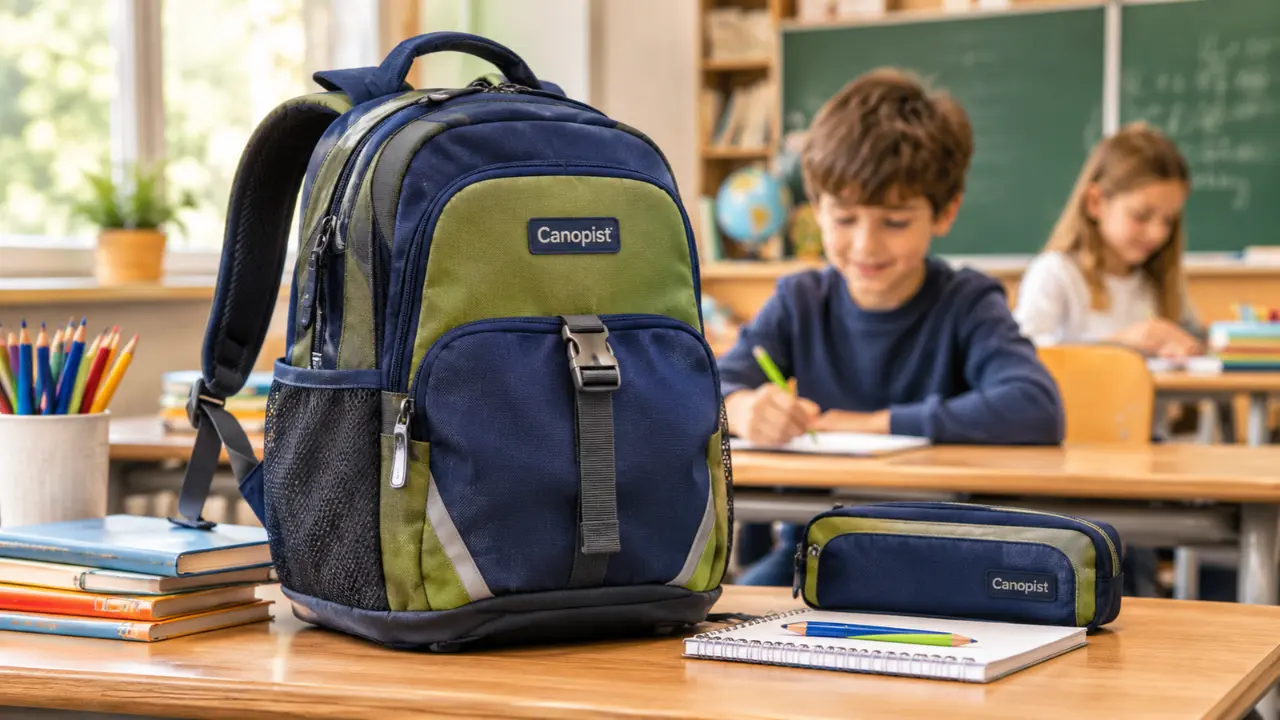
A school bag should do more than carry books. It needs to feel comfortable on a child’s shoulders, withstand everyday use, keep school essentials organized, and give parents confidence that they are buying something worth the money. Canopist deserves attention because its approach brings these practical concerns together through school bags, accessories, material choices, and an emphasis on durability. Rather than judging a backpack by its appearance alone, families should look at how it performs during an ordinary school week. That is where the details of Canopist become important.
Canopist Takes a Practical Approach to School Bags
Choosing a school bag is a decision that affects children every day. A poorly designed backpack can become uncomfortable during the walk to school, difficult to organize, or frustrating to open and close. Parents often have to balance appearance, price, weight, durability, and comfort before making a purchase.
Canopist focuses on several of these everyday requirements. Its product range includes school backpacks and accompanying accessories designed around children’s school routines. The brand places particular attention on materials, carrying comfort, and product construction.
One of the more interesting aspects of its approach is that it does not treat a school bag as a temporary fashion accessory. A backpack should remain useful throughout the school year, even when children carry it regularly, put it down on different surfaces, and use it in changing weather conditions.
That practical perspective makes the brand worth examining, particularly for parents who want to understand what they are paying for before choosing a school bag.
The Canopist Carrier and Its Everyday Design
The Canopist Carrier is one of the brand’s notable products. It is designed for younger schoolchildren, including children starting their first year of primary school.
According to the manufacturer’s product information, the Carrier weighs approximately 900 grams. Weight matters because children already have to carry books, notebooks, lunch boxes, water bottles, and other school supplies. A heavy empty backpack leaves less room for those essentials before the total load becomes uncomfortable.
The Carrier also includes several practical design features:
- A padded back panel for contact with the child’s back.
- Adjustable shoulder straps for a more suitable fit.
- Chest and waist belts to help stabilize the bag.
- Reflective details that improve visibility.
- A magnetic buckle designed for convenient opening and closing.
These features serve different purposes, and they should not all receive equal attention.
The adjustable straps and overall fit deserve the most consideration. A backpack that does not sit correctly can become uncomfortable even when its materials and construction are good. Parents should check whether the shoulder straps can be adjusted to the child’s body and whether the bag remains stable during walking.
The magnetic buckle is another useful detail. Younger children sometimes struggle with complicated fasteners, especially when they are in a hurry. A simple opening mechanism can make daily school routines easier.
The Canopist Carrier also uses CORDURA 1000 material, according to the manufacturer’s product description. This material is associated with durable fabric applications, making it relevant to a backpack expected to handle regular use.
Materials and Construction Matter More Than Appearance
A school backpack experiences repeated physical stress. It is lifted, dropped, packed, unpacked, and carried through different environments. Fabric quality, stitching, fasteners, and construction all influence how well it handles these conditions.
Canopist highlights material quality as part of its product positioning. The Carrier’s use of CORDURA 1000 is particularly relevant because parents often want a bag that can withstand everyday handling rather than one that looks attractive only when new.
Water protection is another consideration. The brand describes the Carrier as water-resistant and waterproof without additional rain protection. Parents should still check the manufacturer’s specific care and usage guidance rather than assume that the backpack can withstand prolonged exposure to heavy rain or complete submersion.
The difference matters in practical situations. A short walk through light rain is not the same as leaving a school bag outside during a storm. Children may also place backpacks on wet playground surfaces or carry drinks inside them.
A durable exterior is valuable, but it does not remove the need for sensible use.
The quality of zippers, seams, straps, and internal compartments deserves attention too. These smaller components often determine whether a backpack remains convenient after months of daily use.
Sustainability Is an Important Part of Canopist’s Approach
School products are purchased in large quantities, and replacing them frequently creates additional material consumption. A backpack that remains usable for several school years can be a more sensible purchase than one that needs replacing after a short period.
Canopist places environmental responsibility among its stated priorities.
According to the company’s website, most of the materials used in its products are made in Germany. The brand also describes its production as taking place in Europe, which it presents as a way to reduce transportation distances.
This approach is worth considering, although the actual environmental impact of a product depends on more than its manufacturing location. Material sourcing, production processes, packaging, transport, product lifespan, and disposal all play a role.
The brand also reports calculating product-related greenhouse-gas emissions and contributing to a climate-protection project. These are company-reported environmental claims, so readers should distinguish them from independently verified lifecycle assessments.
Another point concerns the materials used in the products. Canopist states that its materials carry STANDARD 100 by OEKO-TEX certification. This certification relates to testing textiles for harmful substances. It gives parents useful information about material safety, although it should not be confused with proof that an entire backpack is environmentally harmless.
The most convincing sustainability argument for a school bag is still its useful lifespan. If a product remains functional for years, it may reduce the need for frequent replacements. That is a practical benefit worth examining when comparing backpacks.
Canopist Accessories Help Organize School Life
A backpack is only one part of a child’s school equipment. Students also need places to keep stationery, sports clothing, and smaller everyday belongings.
Canopist offers additional products that complement its school bag collection.
The Shuttle is presented as a sports and gym bag. This type of accessory is useful for children who have physical education classes or after-school activities. Keeping sports clothing separate from books and stationery can make school organization easier.
The brand also lists the Module and Capsule among its accessories. These products add to the collection and provide parents with further options when arranging school supplies.
Accessories are not necessarily essential purchases. Parents should first consider what their children actually need. A child who has regular sports lessons may benefit from a separate gym bag, while another student may have little use for one.
That distinction is important when evaluating the full Canopist range. Buying a complete collection simply because the products match is not always the smartest decision. The better approach is to select accessories according to the child’s school schedule and daily habits.
Why Backpack Comfort Should Be a Priority for Parents
Comfort should be one of the first things parents examine when choosing a school bag. Appearance and brand reputation matter, but neither can compensate for a backpack that does not fit properly.
Children carry different amounts of school equipment depending on their age, timetable, and school requirements. A bag that works well for one student may not suit another.
The adjustable shoulder straps on the Canopist Carrier allow parents to adapt the fit. Its padded back panel also provides a contact surface intended to improve carrying comfort.
Chest and waist belts can help keep a backpack stable when adjusted correctly. However, their presence alone does not guarantee proper weight distribution. The total load, the child’s body size, and the way the bag sits are equally important.
Parents should check a few things before deciding:
- The backpack should sit comfortably against the child’s back.
- Shoulder straps should not dig into the shoulders.
- The bag should not hang excessively low.
- Frequently used items should be easy to reach.
- Heavy school materials should be packed close to the back.
A simple fitting check can reveal more than a product photograph. If possible, let the child try the backpack with a realistic selection of school supplies inside.
Reflective Details and Visibility During School Journeys
Children do not always travel to school in bright daylight. During winter mornings, cloudy weather, or late-afternoon journeys, visibility can become an important safety consideration.
The Canopist Carrier includes reflective details intended to improve visibility. These elements can help make a child more noticeable when light reaches the reflective material.
This is a useful feature for families whose children walk to school or travel along roads with regular traffic.
However, reflective elements should be treated as an additional safety measure rather than a substitute for supervision, safe road-crossing habits, or appropriate visibility equipment.
Parents should also check where the reflective sections are positioned and whether they remain visible when the backpack is worn. A feature only helps when it can be seen from the relevant direction.
For children who travel independently, these small design decisions deserve more attention than decorative patterns or fashionable colours.
Warranty, Repairs, and Customer Support
The value of a school bag should not be judged only at the time of purchase. What happens when a strap becomes damaged or a component stops working can make a considerable difference to the overall buying experience.
Canopist highlights repair and replacement support in qualifying warranty cases. Its website also mentions a minimum two-year statutory warranty.
The brand’s stated support approach is worth considering because it connects product durability with customer service. A company that provides an appropriate route for handling qualifying problems gives customers another reason to consider the expected lifespan of its products.
Still, parents should read the applicable warranty conditions before purchasing. Not every type of damage will necessarily qualify for a repair or replacement.
Normal wear, accidental damage, incorrect use, and manufacturing defects can be treated differently under warranty policies. Buyers should check the exact terms, documentation requirements, and available support options for their location.
The company also states that orders are generally dispatched within one to two working days, although seasonal exceptions may apply. Customers should confirm delivery estimates before ordering, especially when preparing for the beginning of a school term.
What Parents Should Consider Before Buying Canopist Products
Canopist has several appealing product features, but the right purchasing decision depends on the individual child.
The first consideration should be fit. A backpack designed for primary school children may not suit an older student who carries larger books, electronic devices, or additional equipment.
Second, consider the available storage space. Parents should check whether the compartments can accommodate the items their child actually carries. A lightweight backpack is not particularly useful if it cannot hold the necessary school supplies.
Third, examine the price in relation to expected use. A higher initial cost may be reasonable when materials, construction, warranty support, and expected lifespan justify it. However, parents should compare actual product specifications rather than assume that a higher-priced backpack is automatically better.
Fourth, think about cleaning and maintenance. School bags encounter dust, food spills, and everyday dirt. Buyers should check the manufacturer’s care instructions before choosing a product.
Finally, consider the child’s opinion. Children are more likely to use a backpack comfortably when they like its appearance and can manage its compartments and fasteners independently.
The best purchase balances practical performance with the child’s preferences.
Is Canopist Worth Considering for the New School Year?
Canopist offers a school bag range that deserves attention from families looking beyond basic appearance. Its Carrier combines a relatively lightweight design with adjustable straps, a padded back panel, reflective details, and a magnetic buckle.
The brand’s attention to material choices and stated environmental priorities also gives parents additional points to examine. Its accessory range provides options for sports and school organization, while its warranty and repair information adds another dimension to the purchasing decision.
There are still practical questions worth asking before buying. Parents should confirm current prices, available sizes and colours, delivery conditions, warranty coverage, and the suitability of each product for their child’s needs.
No brand can make those decisions on behalf of a family.
Final Thoughts: Choose a School Bag for the Years Ahead
A good school bag should earn its place in a child’s daily routine. It should fit properly, handle regular use, protect everyday belongings, and remain comfortable when the school day gets busy.
Canopist makes a credible case through its Carrier design, material choices, accessories, and stated commitment to product durability. Its strongest selling points are not decorative extras but practical features that parents can evaluate before purchasing.
The real test is simple: does the backpack suit the child who will carry it every day? Check the fit, inspect the construction, compare the warranty, and consider the actual school workload. A thoughtful purchase is worth far more than choosing a bag simply because it looks good on a shelf.
Frequently Asked Questions
1. What age group is the Canopist Carrier designed for?
The Canopist Carrier is designed with younger schoolchildren in mind, including children entering their first year of primary school. Parents should still check its dimensions, fit, and carrying capacity against their child’s individual needs.
2. How much does the Canopist Carrier weigh?
The manufacturer’s product information lists the Carrier at approximately 900 grams. This is its approximate empty weight, so the final load will depend on the books, lunch box, stationery, and other belongings packed inside.
3. Does Canopist offer accessories besides school backpacks?
Yes. The brand’s collection includes the Shuttle sports bag and accessories such as the Module and Capsule. Their usefulness depends on the child’s school timetable and personal organization needs.
4. Are Canopist school bags suitable for rainy weather?
The manufacturer describes the Carrier as water-resistant and waterproof without additional rain protection. Parents should check the specific care instructions and avoid assuming that this guarantees protection during prolonged heavy rainfall.
5. What should parents check before ordering a Canopist backpack?
Parents should examine the backpack’s weight, dimensions, fit, storage capacity, material specifications, current price, delivery arrangements, and warranty conditions. If possible, allowing the child to try the backpack before purchase is also a sensible step.